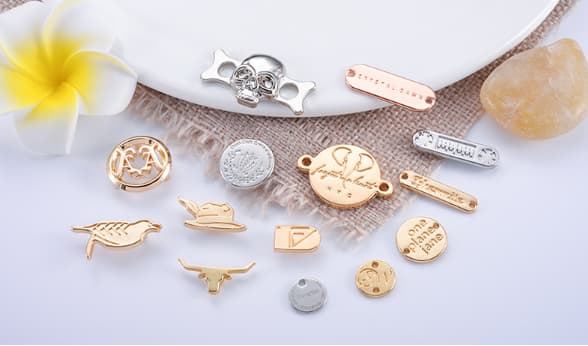
• Personalized Customization High Quality Bag Hardware/Metal Accessories For Brand

News

How does the brand tag test for 24-hour corrosion? Non-toxic-B

2025-04-24

Third. Brand tag comprehensive testing process Sample Preparation Randomly take label samples to ensure coverage of different batches, colors and materials. Record the substrate (e.g. paper, plastic, metal), ink type and post-treatment process (e.g. lamination, hot stamping) of the labels. Brand tag 24-hour corrosion test Perform salt spray, acid/alkali or humidity/heat cycling tests as described above and record changes in appearance and performance. Non-toxicity test We perform the Chemical extraction and biological toxicity tests on the samples after corrosion test and the original samples respectively. Data Analysis and Determination Compare the data before and after the test to evaluate whether the label meets the corrosion resistance and non-toxicity requirements. If a certain index fails, it is necessary to trace back the production process and optimize the material or process. Fourth.precautions Brand tag test environment control Ensure stable laboratory temperature, humidity and corrosive medium concentration to avoid external factors interfering with the results. Brand tag standard reference Select the test method and limit value according to the regulations of the target market (e.g. EU EN 71-3, US ASTM F963, China GB 6675). Long-term verification The 24-hour test is an accelerated test, which needs to be combined with long-term aging tests (e.g., 90 days, 180 days) for comprehensive evaluation in actual use. Through the above methods, the 24-hour corrosion resistance and non-toxic performance of brand labels can be systematically tested to ensure that they comply with safety standards and are suitable for high-risk areas such as food and children’s products.

More

100 Questions on Basic Electroplating Knowledge (Part 7)

2025-04-23

31.Why is pig iron castings more difficult to plating than other steel parts? Answer: Cast pig iron parts, the surface is often uneven and porous, in such a surface will only get rough and porous plating. In addition, in the pig iron surface, there are free graphite, it not only affects the plating and the combination of base metal, at the same time, there are pores in the plating of the case, it will become the cathode of the corrosion battery, so that the plating of the metal is quickly destroyed, the graphite in the pig iron, and sometimes have to reduce the role of the hydrogen super-voltage, resulting in the hydrogen is easy to precipitate in the place, impeding the deposition of metal, so the casting of the pig iron parts more than other Iron and steel parts are difficult to plating. 32.. In the cyanide copper plating, free cyanide is insufficient, what should be added? Can I add cuprous cyanide? Answer:When free cyanide is insufficient in copper cyanide plating, sodium (or potassium) cyanide should be added. If you add cuprous cyanide, Gradual reduction of the free cyanide , and the copper coating becomes coarse and rough.CuCN+2NaCN=Na2Cu(CN)3 33.When making-up a cyanide copper plating solution, is it correct to dissolve the powdered cuprous cyanide in warm water and then add it to the plating bath? Answer:No. due to cuprous cyanide is insoluble in water. Copper cyanide should be dissolved in a solution of sodium (or potassium) cyanide, and the amount of sodium cyanide is 1.15 times that of copper cyanide. 34.In the cyanide copper plating solution, the use of air stirring is appropriate? Answer:It is not suitable to use air stirring in cyanide copper plating solution. Because the carbon dioxide in the air will react with the alkali in the…

More

100 Questions on Basic Electroplating Knowledge (Part 6)

2025-04-23

26.Known current density and plating time, how to find the thickness of the plating layer? Answer: First of all, according to the type of plating the current efficiency of the process, while checking the table to get the electrochemical equivalent of the metal and the density (specific gravity), and then calculated according to the following formula: ■ Plating thickness d formula (d: microns).Plating thickness d formula (d: micron)d=(C×Dk×t×ηk×100)/(60×r)■Plating time t calculation formula (t: minutes)t=(60×r×d)/(C×Dk×ηk×100)■Cathode current density Dk calculation formula (Dk: A/dm2)Dk=(60×r×d)/(C×t×ηk×100)■Cathode current efficiency calculation formula:ηk=(60×r×d)/(C×t×Dk×100)C=electrochemical equivalent (g/ampere-hour)Dk=cathodic current density (amperes/square decimeter)t=plating time (min)ηκ=cathodic current efficiency (%)r = plating layer metal density (g / cm 3)Example: nickel plating solution is known to be 95% current efficiency, cathode current density of 2.5A / d ㎡, plating 20 minutes after the resulting thickness of the plating layer is how much? Check the table to get the nickel electrochemical equivalent of 1.095 density 8.8d = (C × Dk × t × ηk) / 60r = 1.095 × 2.5 × 20 × 95% × 100 / (60 × 8.8) = 9.85um 27.What are anodic and cathodic plating, and for iron substrate, zinc, copper, nickel, chromium, copper-tin alloy and so on. plating belongs to that category of plating? Answer:Base on the electrochemical relationship between the plated metal and the base metal, the plating can be divided into anodic plated and cathodic plated, under general conditions, the electrode potential of the plated metal is negative than that of the base metal, it is called anodic plating, and vice versa, it is called cathodic plating. Zinc plating electrode potential than the electrode potential of the iron substrate is negative, so the zinc plating is anodic plating. Copper, nickel, copper-tin alloy plating potential than the potential of the iron substrate is positive. So, it is cathodic plating. Chromium plating…

More

100 Questions on Basic Electroplating Knowledge (Part 5)

2025-04-23

21.What is electrolysis? Answer:When the electric current passes through the electrolyte, the redox reaction occurs on the electrode so that the electrolyte is decomposed under the action of the current is called electrolysis. When the electrolyte is energized, the cations move to the cathode, and get electrons at the cathode and be reduced to a new substance; anions move to the anode, and lose electrons at the anode and be oxidized to a new substance. Sometimes the oxidation of the electrode material also occurs at the anode. An example is the electrolysis of molten sodium chloride.NaCl→Na++Cl-Cathode Na++e→NaAnode 2Cl–2e→Cl2↑Electrolysis industry plays a huge role in the national economy, the smelting of many non-ferrous and rare metals, the preparation of chemical industry products and electroplating, electropolishing, anodic oxidation and so on are realized by electrolysis. Translated with DeepL.com (free version) 22.What is electroplating? Answer: By electrolysis, in the metal parts on the surface of the deposition of a thin layer of other metal methods, it is called electroplating. Plating includes pre-plating treatment (oil removal, rust removal), plated metal layer and post-plating treatment (passivation, dehydrogenation) and other processes. It is used to prevent corrosion of metal products, repair worn parts, increase durability, reflectivity, electrical conductivity and aesthetics. Plating will be metal parts as the cathode, the plated metal plate or bar as the anode, respectively, hanging in the copper pole bar above the electrolyte containing plating components immersed in the direct current.In individual cases, there are also insoluble anodes, such as chromium plating with lead or lead-antimony alloy anode. 23.What is current strength? Answer:Current strength, referred to as current, is the amount of electricity passing through the cross-section of the conductor per unit time. The unit is ampere, referred to as ampere (A). 24.What is the current density? How to calculate? Answer:Current density…

More

Brand tag temperature of electrophoresis rack

2025-04-23

The term “Brand tag electrophoresis lattice” is not a common term in the industry, but in conjunction with the “electrophoresis lattice” related process, the temperature control needs to be determined according to the specific type of process and equipment requirements. The following is the possible temperature range and analysis: Electrophoresis process temperature Conventional electrophoresis We controll the temperature of the electrophoresis bath at 25°C to 30°C to make sure a uniform and dense electrophoresis film. Too high a temperature may cause the paint film to hang, and too low a temperature may affect the reaction rate of electrophoresis. Low temperature electrophoresis For some special processes ( low-temperature curing electrophoresis paint),we should control the bath temperature at 15°C to 20°C to match the low-temperature curing system. Curing temperature of the frame (coating) Heat curing If “lattice” refers to the curing of the coating after electrophoresis, the temperature is usually 160°C to 180°C and the time is 20 to 30 minutes, depending on the type of electrophoresis paint ( epoxy, polyester). UV curing We use UV curing to instantly cure coatings without heat, relying on a UV light source instead Equipment operating temperature Electrophoresis tank We should equip with a temperature control system in tank to ensure that the temperature of the tank liquid is stabilized within the range of process requirements, with a fluctuation of no more than ±2°C. Curing equipment The temperature of curing oven should be uniform, and the temperature difference should not exceed ±5°C to avoid uneven coating quality. Special process temperature Low temperature electrophoresis + high temperature curing Some processes may use low-temperature electrophoresis with high-temperature curing , and the temperature control of the electrophoresis and curing stages should be strictly differentiated. Rapid curing Some high solids electrophoresis paints may support low temperature rapid curing from 140°C…

More

Brand tag spray lattice oil temperature

2025-04-23

The term “Brand tag Spray Rack Oil” is not a common or widely recognized term, and in conjunction with the term “Spray Rack”, it is assumed that it may relate to the lubricant of industrial spraying equipment or related process oils, but the specific temperatures need to be determined based on the process of the equipment, the type of oil, and the usage scenario. However, the specific temperature should be determined by the equipment process, oil type, and usage scenario. The following are possible temperature ranges and analyses: Brand Tag equipment operating temperature If the term “spray frame” refers to spray equipment, the operating temperature is usually specified by the equipment manufacturer. For example, hydraulic systems or transmission components of spray equipment may require lubricants to operate between 40°C and 80°C, as specified in the equipment manual. If we involve a high temperature coating process , temperatures may be as high as 180°C to 220°C, and we required a special lubricant with a high temperature tolerance Oil type and temperature Hydraulic fluids Typical operating temperatures range from 30°C to 80°C. high temperature environments.required High viscosity index oils Gear oil Used for heavy-duty gear transmission, the working temperature can reach 100°C to 120°C, and good extreme pressure and anti-wear performance is required Heat transfer oil Used in high temperature heating system, the working temperature range is from 150°C to 350°C. it should select Synthetic heat transfer oil Process temperature If the “Spraybar” involves a spraying process,we should take into acount the following temperatures: Ambient coating temperature: usually 20°C to 30°C to make sure that the oil is fluidity. Curing temperature: The temperature of powder coating curing is at 180°C to 220°C , where the lubricant needs to be resistant to high temperatures. Safety and operating recommendations Check equipment manuals Equipment manufacturers…

More

Brand Tags with b-type oil spraying of Performance Requirements, Testing Standards and Optimization of Electroplated

2025-04-22

Brand tag weather resistance Ultraviolet stability the spray oil layer needs to have good UV resistance to prevent yellowing and chalking. Adding UV absorber can prolong the service life. Brand tag temperature adaptability The plating and sprayed layer should be able to withstand high ( 80°C) and low (-20°C) temperatures to avoid cracking due to thermal expansion and contraction. Testing standards We require QUV accelerated weathering test or damp heat cycle test . Brand tag optical properties Gloss Plating (e.g. chrome) has high reflectivity and the gloss of the sprayed layer can be adjusted with matte, semi-gloss or high-gloss coatings. Brand tag color consistency We coordinate the color of the oil-sprayed layer with the plating layer to avoid any color difference.” Transparency For signage that requires light transmission (e.g., backlit logo), transparent spray material should be selected. Electrical properties Conductivity plating layer (such as gold, copper) has good electrical conductivity, suitable for electronic labels or the need for electrostatic shielding of the scene. Insulation the oil spraying layer is an insulating material, which can prevent the plating layer from short-circuit or leakage. Mechanical properties Impact resistance the oil spray layer can absorb the impact energy and prevent the plating layer from peeling off. Scratch resistance The combination of hard plating layer and high hardness oil spray layer provides excellent scratch resistance. Environmental Adaptability Brand tag chemical resistance Signage may come into contact with chemicals such as acids, alkalis, solvents, etc. we should selecte Chemical resistant plating and oil spraying materials Salt spray resistance suitable for marine or high humidity environment, need to be verified by salt spray test. Brand tag optimization suggestions Material Selection Select the appropriate plating and oil spraying materials according to the application scenario. For example, outdoor signage is recommended to use UV coating and hard plating…

More

Brand tag physical properties of post-electroplating oil spraying-A

2025-04-22

Brand tag (brand signage) after plating the physical properties of the spray oil will be plated and spray oil material and its process of the joint influence, specific performance is as follows: Brand tag hardness Plating layer influence plating layer (such as nickel, chromium, gold, and so on) itself has a certain hardness, can improve the wear resistance of the signage. For example, the hardness of hard chrome plating layer can reach 800-1200 HV, which can effectively resist scratches and abrasion. Oil spraying influence The hardness of oil spraying layer (such as UV paint, polyurethane,and so on) is usually lower than that of plating layer, but it can be enhanced by adding hardener or choosing high hardness coating. The hardness of the sprayed layer is generally between 2H-4H (pencil hardness). Brand tag combined performance The overall hardness of plated and then oiled signage depends on the synergistic effect of the plating and oiled layers. The plating layer provides the base hardness, while the oil spray layer provides protection and decoration. Adhesion Combination of plating layer and spray oil The surface roughness and chemical properties of the plating layer will affect the adhesion of the spray oil. Usually, appropriate surface treatment (polishing, activation) is required after plating to improve the adhesion of spray oil. Brand tag test standard According to 100-gauge test or the grid method,we can evaluate Adhesion , and high quality plating and spraying signage should reach grade 4B-5B. Corrosion resistance The role of plating layer plating layer (such as nickel, chromium) itself has good corrosion resistance, can prevent the base material (such as copper, zinc alloy) is oxidized or corrosion. The role of the oil-sprayed layer oil-sprayed layer can further isolate moisture and corrosive media, but need to choose the excellent chemical resistance of the paint (such as…

More

Physical properties of brand tag’s electrophoretic lattice frame

2025-04-22

The “Brand tag” electrophoresis lattice is not a widely recognized or standardized product name. In common industry terminology, electrophoresis and lattice (often referred to as a sealer or topcoat) are two different surface treatments that may be combined for specific products, but there is a lack of publicly available technical information that directly corresponds to the “Brand tag” electrophoresis lattice. However, there is a lack of publicly available technical information that directly corresponds to the “Brand tag electrophoresis lattice”. The following provides a framework for analyzing the physical properties of electrophoresis and lacquering processes: First. Brand tag physical properties of electrophoresis process Electrophoretic coating causes charged particles to be deposited on the surface of the workpiece through the action of an electric field, forming a uniform coating, and its physical properties include: Coating uniformity electrophoresis can realize uniform coverage of the inner cavities and crevices of complex workpieces, avoiding dead corners. Adhesion dense paint film, strong bonding with substrate, excellent impact resistance.Corrosion resistance dense coating, salt spray resistance test can reach more than 72 hours, suitable for high corrosion resistance requirement scene. Mechanical properties high hardness (such as 180 ℃ baking hardness up to 4-5H), strong impact resistance. Glossiness: By adjusting the ratio of high-gloss/low-gloss paint, different gloss requirements can be realized. Second, the physical properties of the lattice frame (closed paint / top coat) process Lattice frame is usually used as a surface protection layer, its physical properties include:Weathering resistance: to prevent the underlying plating layer from oxidizing and discoloring, and to enhance the corrosion resistance. Brand tag hardness and abrasion resistance Provide surface hardness to resist scratches and abrasions. Adhesion Good bonding with electrophoretic coating or underlying metal to prevent flaking. Glossiness can be adjusted to transparent, matte or high-gloss effect to meet the demand of appearance. Thirde.potential…

More
Whatsapp Whatsapp
Whatsapp
Call Call
+86-13924451472
Facebook Facebook
Facebook
Youtube Youtube
youtube
LinkedIn LinkedIn
LinkedIn