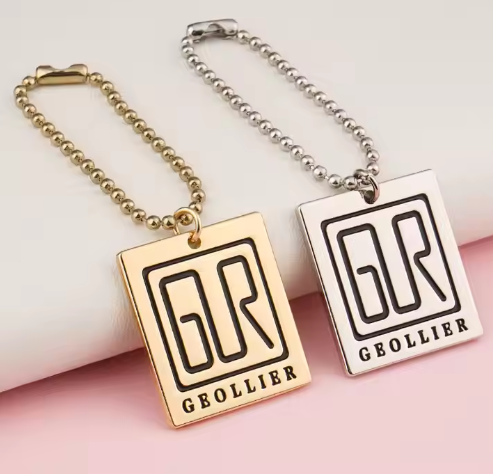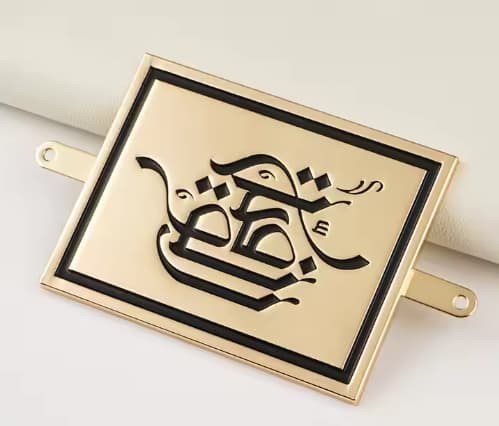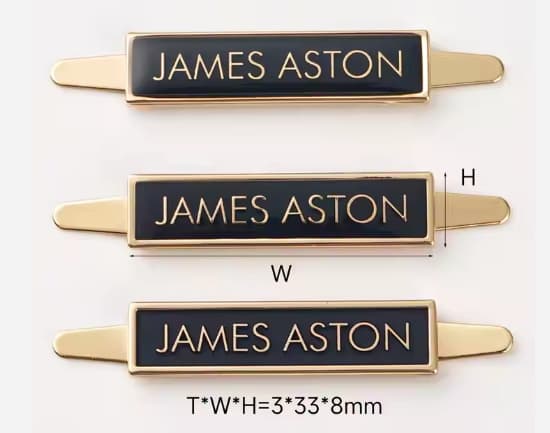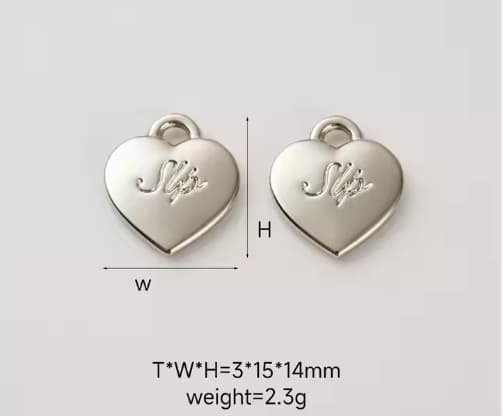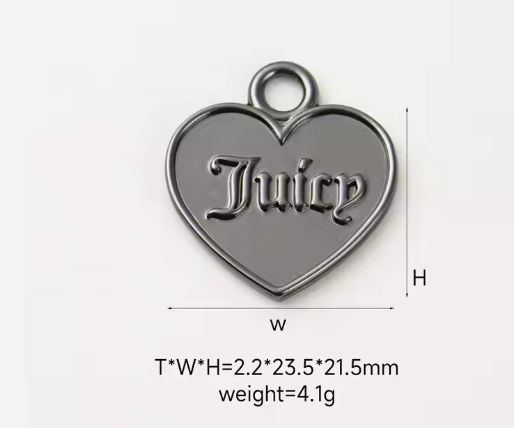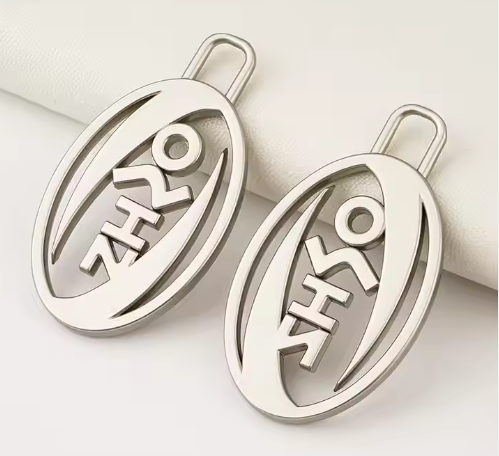
• Personalized Customization High Quality Bag Hardware/Metal Accessories For Brand

News

Properties of electrophoretic racks of engraved round metal logo-A

2025-05-15

The physical properties of ‘Engraved Round Metal Logo’ need to be analysed in conjunction with the characteristics of the electrophoretic coating and the frame (transparent protective lacquer), and the following are the key performance indicators and technical explanations: Corrosion resistance Advantage of electrophoretic coating Electrophoresis process forms a uniform and dense resin film on the metal surface through electrodeposition, which effectively isolates water, oxygen and corrosive media. For metal Logo, it can significantly improve the resistance to salt spray, acid and alkali, and prolong the outdoor service life. Role of lacquer (clear lacquer) As a lacquer face, lacquer further enhances the sealing of the coating and prevents the electrophoretic layer from failing due to mechanical damage or environmental erosion, especially it is suitable for high humidity or chemically contaminated environments. Hardness and abrasion resistance Characteristics of electrophoretic layer The hardness of electrophoretic coating is usually 2H-3H (pencil hardness), which can resist slight scratching, but need to avoid direct scratching by sharp objects. Enhancement effect of lattice frame Transparent lattice frame has higher hardness after curing (e.g. 3H-4H), which forms a protective barrier and reduces the abrasion of the Logo surface, especially suitable for high-frequency contact areas (e.g. electronic product housings). Adhesion Advantage of electrophoresis process Electrophoresis coating combines with metal substrate through electrochemical action, with strong adhesion (usually ≥5B, 100-g test), and can withstand mechanical stresses such as bending and impact. Compatibility of lattice frame High-quality lattice frame has good compatibility with electrophoresis layer and forms a composite coating after curing, which further improves the overall adhesion and avoids delamination or peeling off. Appearance and gloss Electrophoretic coating effect It can provide various surface effects such as high-gloss, matte, etc., with even colour and no flow marks or orange peel phenomenon. Modifying effect of lacquer frame Transparent lacquer frame can…

More

Difference between electrophoresis lattice frame and oil spraying of metal logo-B

2025-05-14

Application Scenarios of metal hardware Electrophoresis Lat Frame Suitable for metal products with high requirements for corrosion resistance, such as automotive parts, home appliance shells, hardware tools and so on. Suitable for mass production, high automation and high efficiency. Oil Spraying (Paint Spraying) Suitable for workpieces of various materials (metal, plastic, wood, etc.) and shapes, especially for small batch or customised production. Widely used in furniture, electronic products, toys, building decoration and other fields. Cost of metal hardware Electrophoresis lattice frame Large investment in equipment (electrophoresis tank, power supply, drying equipment, etc.). Suitable for mass production, lower cost per piece. High environmental protection requirements, higher cost of waste water treatment. Metal Logo Oil spraying (painting) Relatively low investment in equipment (spray gun, spray booth, drying equipment, etc.). Suitable for small batch production, but labour cost may be higher. Higher cost of paints and solvents, additional waste gas treatment equipment is required when environmental protection requirements are strict. Summary and Suggestion of metal hardware Selection of electrophoresis lattice frame situation The workpieces are made of metal and have high requirements for corrosion resistance and adhesion. High volume production, pursuing high efficiency and stable quality. Focus on environmental protection, need to comply with VOC emission standards. Selection of oil spraying (painting) of metal logo Complex shape of workpiece or diverse materials (e.g. plastic, wood). Small batch or customised production, need to flexibly adjust the colour and appearance effect. High requirements for decorativeness, need to realise special effects (e.g. metal texture, grain).

More

Metal logo-difference between electrophoresis lattice frame and oil spraying-A

2025-05-14

Metal Logo’ electrophoretic lattice frame and oil spraying (painting) are two different surface treatment processes, the main difference is reflected in the principle of the process, the appearance of the effect, performance characteristics, application scenarios and costs. The following is a specific analysis: Process principle Metal Logo Electrophoretic lattice frame (electrophoretic coating) Electrophoretic coating is a process of depositing charged paint particles on the metal surface through the action of electric field. The specific process includes: The metal logo is immersed into the electrophoretic paint tank as an electrode. Under the action of DC electric field, the charged resin and pigment particles migrate towards the surface of the workpiece and are deposited. After baking and curing, will form a uniform and dense coating We use electrophoretic laths on metal surfaces to create protective and decorative coatings Oil Spraying (Painting) Paint spraying is to spray paint evenly on the surface of the workpiece after atomisation by a spray gun, relying on the adhesion of the paint and the drying process to form a coating. The specific process includes: Surface pre-treatment ( degreasing, descaling, sanding). Spraying the paint, which usually requires several coats to achieve the desired thickness. Natural drying or baking to cure. The spray painting process is flexible and applicable to a wide range of materials and shapes of workpieces. Appearance effect Metal Logo Electrophoretic lattice frame Uniform coating, good coverage of edges and depressions, suitable for complex shaped workpieces. Smooth surface with adjustable gloss (matte, semi-gloss, high-gloss). Relatively limited choice of colours, but we can achive a wide range of colours by paint mixing. Oil spraying (lacquering) it can achive the variety of appearance effects, high gloss, matte, metallic, texture effects, etc. A wide selection of colours is available, and we can achive almost any colour by colour mixing….

More

Luggage hardware -the effect of electrophoretic lattice hardness-B

2025-05-13

Luggage hardware integrated impact analysis Performance synergy The combination of hardness, electrophoresis and lacquering processes can significantly enhance the overall performance of the luggage hardware. The hardness provides basic strength, the electrophoresis provides corrosion resistance and adhesion guarantee, and the lattice frame further improves abrasion resistance and decorative properties. Luggage hardware application Scenarios Industrial hardware: We required high hardness, corrosion resistance and abrasion resistance and recommened that useing high hardness base material + electrophoretic coating . High-end decorative signage We recommened high gloss and corrosion resistance, electrophoresis priming + racking process Outdoor signage We require long-term weathering resistance and recommen electrophoretic coating + racking process , and select good weathering resistant paint . Cost and process trade-off The cost of lattice process is high, if the budget is limited, only electrophoresis process can be used; if the requirements for decorative and abrasion resistance are very high, then the combination of lattice process is needed. Luggage hardware recommended solutions Base programme High hardness metal substrate (e.g. stainless steel) + electrophoretic coating, suitable for most industrial and outdoor scenarios, cost-effective. High-end solution High hardness metal substrate + electrophoretic coating + racking process, suitable for high-end decorative signs, combining performance and aesthetics. Special requirements programme According to the specific environment ( high salt fog, high temperature), we can choose special coatings or processes, such as salt fog-resistant electrophoretic coating or high-temperature lattice process. Conclusions and Recommendations Luggage hardware hardness selection needs to be “customized” High-end products: 4H hardness is preferred, taking into account the aesthetics and durability; Mid-range products: 3H hardness is the most cost-effective; Low-end products: 2H hardness can satisfy the basic needs. Direction of process optimization Enhance the performance through composite process (e.g. anodic oxidation + electrophoresis); Develop low-temperature curing high-hardness electrophoresis paint to reduce energy consumption and risk of deformation…

More

Luggage hardware-the effect of electrophoretic lattice hardness-A

2025-05-13

For luggage hardware, the hardness, electrophoresis and latticework processes have the following effects on its performance: Luggage hardware effect of hardness on performance Abrasion resistance Higher hardness significantly will improve the abrasion resistance of the luggage hardware and reduces surface damage caused by friction or scratches, making it used for high-frequency use or exposure to harsh environments (industrial equipment, outdoor signs) Deformation resistance Increased hardness will improve the deformation resistance of the logo, making sure that it keeps the shape and stability of logo when subjected to force or long-term use, avoiding dents or distortions caused by external forces. Risk of brittleness If the hardness is too high, the material maybe become brittle and be prone to cracking or fracture when subjected to impact, therefore it is necessary to balance the hardness and toughness according to the actual application situation. Luggage hardware effect of electrophoresis process on performance Corrosion resistance Electrophoretic coating can form a uniform and dense protective film, effectively isolate moisture, oxygen and corrosive media, will improve the corrosion resistance of the sign and prolong its service life. Adhesion The electrophoretic coating has a strong bond with the metal substrate and it is not peel off easily, it suitable for signs that are exposed to humidity, high temperature or chemical environments for a long time. Luggage hardware appearance quality The electrophoresis process can get a high gloss, uniform coating effect, enhancing the aesthetics of the sign, and masking minor imperfections on the metal surface. Luggage hardware environmental friendliness Modern electrophoresis processes mostly use water-based coatings with low VOC emissions, which meets environmental requirements and is suitable for environmentally friendly application scenarios. Impact of the lattice frame (chrome plating) process on performance Decorative The chrome plating process can give the logo a mirror-like luster and significantly enhance its appearance,…

More

Bag hardware of the abrasion resistance-B

2025-05-12

Bag hardware correlation between operating environment and wear resistance High friction scenarios (e.g. industrial machinery) Recommended 316 stainless steel + PVD coating, Taber wear test (CS-10 wheel, 500g load) up to 5000 rpm without bottoming out. Low frequency contact scenarios (e.g. consumer goods) Aluminium anodising + hard oxidation (thickness ≥25μm) can meet the requirements, reducing costs by more than 30%. Extreme environments (e.g. offshore platforms) Need to use super duplex stainless steel (such as S32760) + electrochemical polishing, Pitting Resistance Equivalent (PREN) ≥ 40, corrosion rate <0.01mm/year. Wear resistance test standard reference Bag hardware ASTM D4060 (Taber Wear Test) Used to assess the wear resistance of organic coatings, metal hardware can refer to its test principle, by adjusting the load and number of revolutions to simulate the actual wear. ISO 15184 (Pencil Hardness Test) Used to assess the hardness of coatings, the surface hardness of bag hardware with good abrasion resistance should be ≥ 6H. Bag hardware recommended programme High wear resistance requirement 316 stainless steel substrate + PVD TiN coating (thickness ≥ 3μm), Taber wear test ≥ 8000 rpm. Cost-effective solution 6061 aluminium alloy + hard anodised (thickness ≥25μm), cost reduction of 40%, wear resistance to meet daily use. Decorative demand H62 brass + chemical nickel plating (thickness ≥ 5μm), both wear-resistant and beautiful, suitable for indoor low-frequency contact scenarios. Through the reasonable choice of material, technology and structural design, the wear resistance of bag hardware can be significantly improved and the service life can be extended. Bag hardware summary High-end bags: give priority to pure steel or high-strength aluminum alloy hardware, combined with anodic oxidation or multi-layer plating process to ensure wear resistance and service life. Mid-range bags: zinc alloy is the cost-effective choice, but need to improve wear resistance through surface treatment. Daily use: avoid prolonged exposure…

More

Bag hardware of the abrasion resistance -A

2025-05-12

The abrasion resistance of bag hardware mainly depends on the material selection, surface treatment process, design structure and use environment, the following are specific analyses and recommended directions: Influence of material on wear resistance Stainless steel (recommended) 304 or 316 stainless steel is suitable for high-frequency use scenarios (industrial equipment, outdoor signs) due to its high hardness and corrosion resistance. For example, 316 stainless steel contains molybdenum, it improves salt spray corrosion resistance by more than 30% compared to 304, making it suitable for humid environments. Aluminium alloy (lightweight option) The hardness of 6061-T6 aluminium alloy is about HV95, and the abrasion resistance is increased by 2-3 times after anodic oxidation on the surface, which is suitable for weight-sensitive scenarios (portable equipment). However, strong acid and alkali environments need to be avoided. Copper alloy (decorative priority) Brass (H62) hardness HV80-100, wear resistance is weak, but can use to nickel-plated (thickness ≥ 5μm) to enhance wear resistance, suitable for low-frequency contact decorative parts. Surface treatment process to enhance wear resistance Physical vapour deposition (PVD) coating TiN (Titanium Nitride) coating hardness high to HV2000, wear resistance is 3 times of chromium plating, suitable for high-end equipment marking. Laser hardening Laser fusion coagulation of stainless steel surfaces can form a hardened layer with a thickness of 0.1-0.3mm, increasing the hardness to over HV600 and significantly improving scratch resistance. Chemical conversion film Stainless steel passivation treatment (trivalent chromium passivation) can improve corrosion resistance and indirectly reduce the wear rate, suitable for long-term exposure to the environment. Design structures to optimise wear resistance Rounded corner transitions We round Logo edges with R≥0.5mm to avoid wear cracks caused by stress concentration. For example, rounded corners on automotive wheel logos can increase wear life by up to 40%. Layered structure The three-layer structure of substrate + wear-resistant…

More

Luggage hardware hardness of electrophoretic lattice frame -B

2025-05-10

Fourth.hardness test methods and standards Luggage hardware commonly used test methods Pencil hardness test According to GB/T 6739 standard of luggage hardware, use a pencil of known hardness to scratch at an angle of 45°, and take the highest hardness value without scratch as the result. Vickers hardness (HV) for thin coatings (<50μm), the hardness value is calculated by the diagonal length of the indentation. Knoop hardness (HK) more accurate hardness measurement of small areas, suitable for localised hardening treatments. Luggage hardware standard references Automotive industry standards ( GMW 14872) require electrophoretic coatings to have a pencil hardness of ≥3H and a scratch resistance (under 500g load) of ≤3mm scratch width. Industrial equipment standards may be more stringent, HV ≥ 200. Fifth.hardness performance in practical applications Scratch resistance Hardness and scratch resistance are not linearly related. For example, a coating with HV300 may be scratch-free under a force of 5N, but a coating with HV250 may perform better with the addition of a lubricant (such as silicone oil). Environmental Adaptability High temperature and high humidity environments (such as 85°C/85%RH) may cause the coating to soften and the hardness to drop by 20-30%. Long-term hardness stability needs to be verified by ageing tests. Sixth.recommendations and directions for optimisation Process optimisation Adjust the pH (5.5-6.5) and conductivity (1000-1500μS/cm) of the electrophoresis solution to improve the densification of the coating. Adopt UV curing technology for the lattice layer, which can shorten the curing time to within 10 seconds and increase the hardness by 15%-20%. Luggage hardware material Selection For scenes requiring high hardness (outdoor signage), a combination of stainless steel substrate + epoxy electrophoresis + two-component polyurethane lattice frame is recommended. For lightweight requirements, aluminium alloy substrate can replace part of the electrophoresis layer function by anodic oxidation pretreatment (hardness HV300-400). Quality Control…

More

Hardness of electrophoretic lattice frame of metal logo-A

2025-05-10

The hardness of the ‘Engraved Round Metal Logo’ is a complex issue that involves a number of factors (such as the electrophoretic coating process, the way the frame is handled, the metal substrate, and so on), and it is not possible to give a fixed value directly. The following are the key influencing factors and analyses: First.influence of electrophoretic coating on hardness Metal logo coating type and thickness The hardness of an electrophoretic coating is directly influenced by the formulation and thickness. For example, epoxy resin-based electrophoretic coatings are usually hard , while acrylic resin-based coatings may be soft . The thicker the coating, the surface hardness may vary depending on the degree of curing, but too thick a coating is prone to internal stresses, which in turn reduces the actual scratch resistance. Curing process Curing temperature and time play a important role in hardness. For example, the curing of an epoxy coating at 180°C for 30 minutes is more harder than one cured at 160°C for 20 minutes. If curing is inadequate, the coating may be sticky or scratched easily . Second.enhancement of hardness by lattice treatment of metal logo Role of the lacquer layer A lacquer (such as acrylic varnish) acts as a transparent protective layer and enhances the surface hardness by 1-2 pencil hardness levels. For example, when the electrophoretic coating itself is 3H, it may reach 4H-5H after lattice treatment. Synergy between lattice frame and electrophoresis layer If the chemical compatibility between lattice frame and electrophoretic coating is poor, it may lead to insufficient adhesion between layers, limited hardness enhancement or even cracking. Compatibility needs to be verified by adhesion test (scratching method). Third.influence of metal substrate Metal logo substrate material Stainless steel substrates (304, 316) have a significantly higher hardness than aluminium alloys After electrophoretic…

More
Whatsapp Whatsapp
Whatsapp
Call Call
+86-13924451472
Facebook Facebook
Facebook
Youtube Youtube
youtube
LinkedIn LinkedIn
LinkedIn