How to Choose Bag Hardware? A Complete Guide from Materials to Plating
Most people judge a bag by its leather, color, or silhouette—but the one component that truly determines its lifespan is the hardware. Leather can be conditioned, stitches can be repaired, but if the hardware breaks, the bag is basically done for. Replacing it costs almost as much as buying a new bag.
As a foreign trade salesperson, helping your clients choose quality hardware suppliers is key to building trust. This guide covers materials, plating, surface finishes, supplier screening, and quality testing—everything you need to know about bag hardware, all in one place.
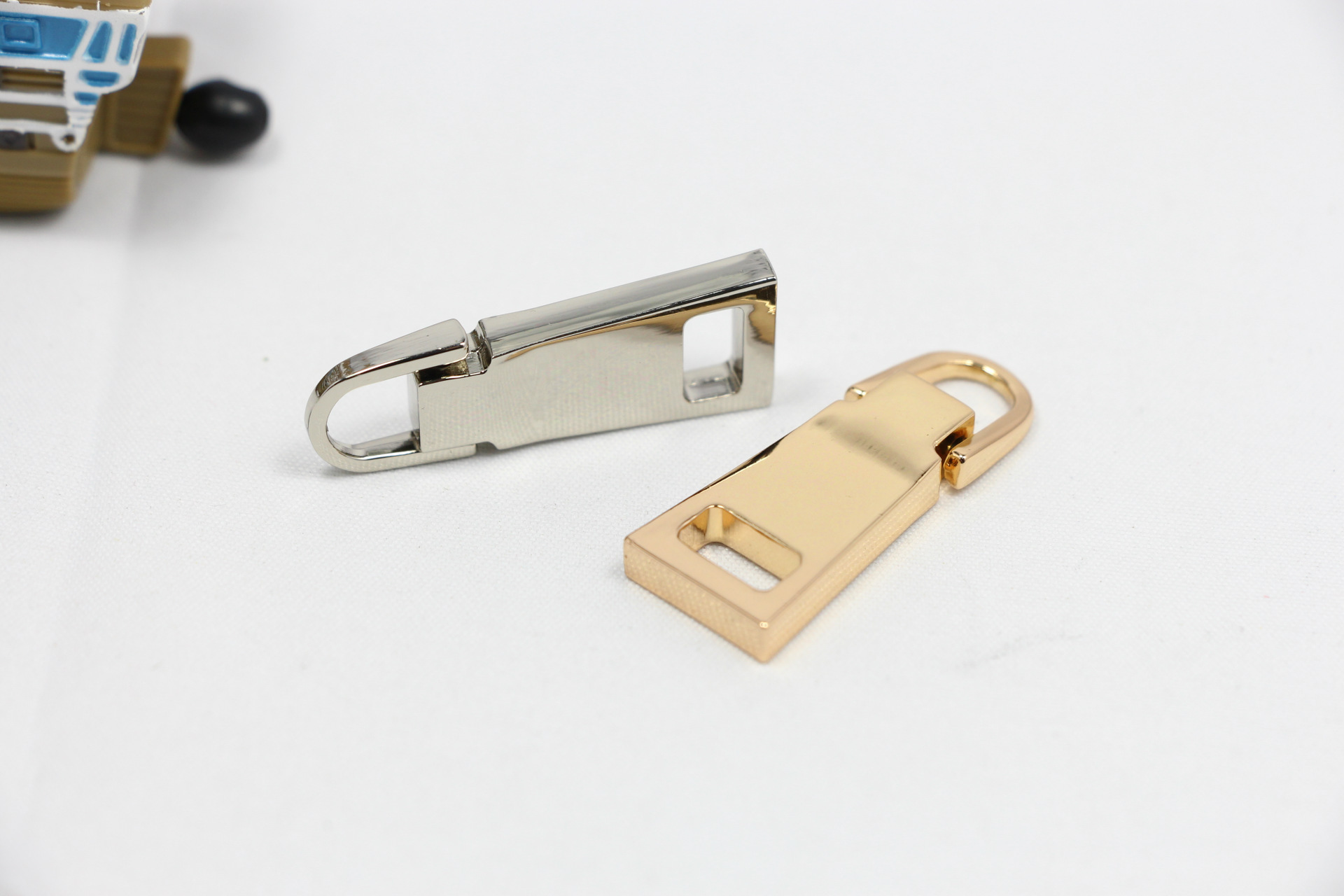
How to Choose Hardware Materials?
The base material of hardware determines its strength, weight, and durability. Choose the right material, and your hardware will stand up to daily wear and time. There are four main materials on the market, each with its own pros, cons, and best-use scenarios.
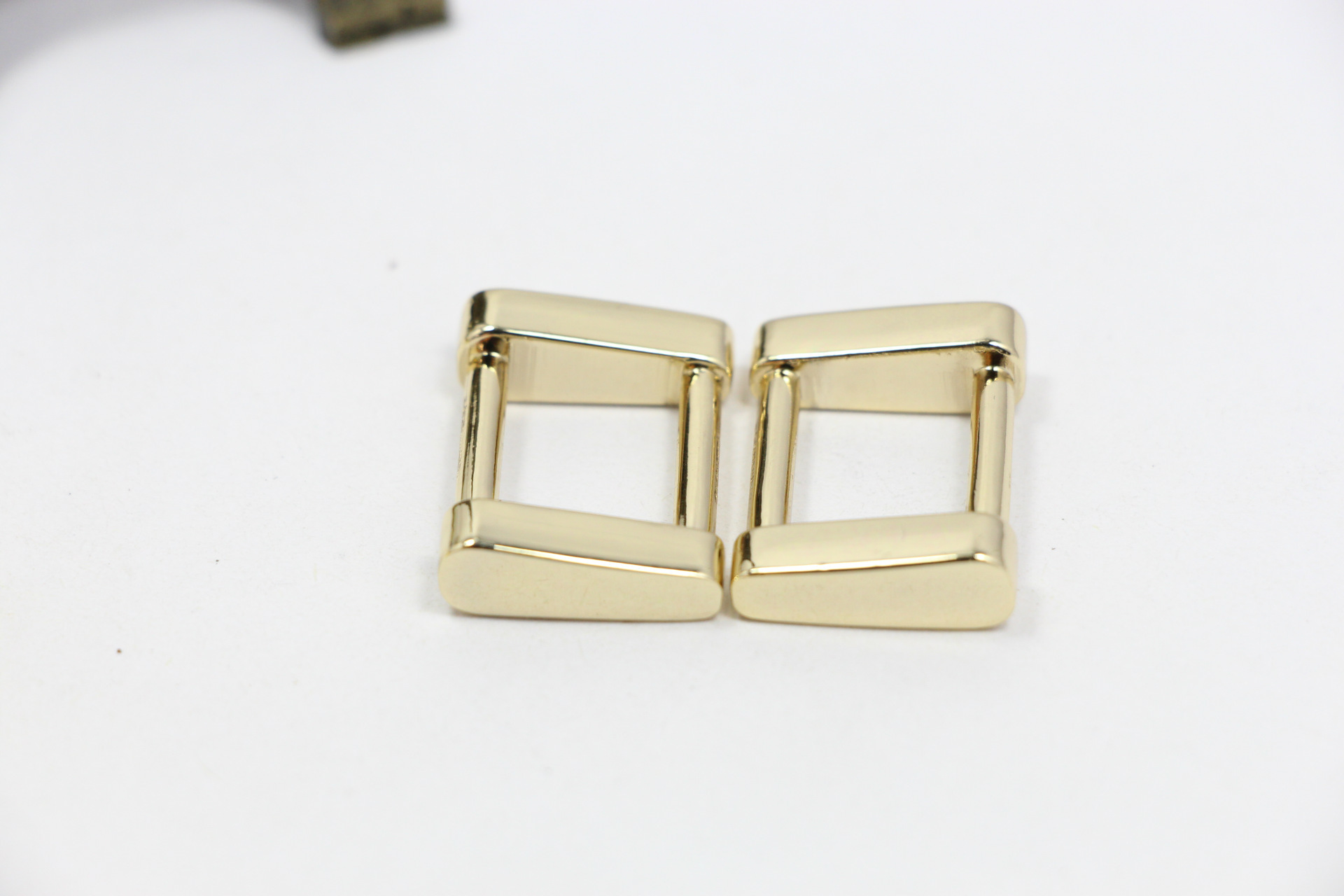
Zinc Alloy
This is the undisputed “workhorse” of bag hardware—over 70% of bags on the market use zinc alloy for their hardware.
Pros:
- Low cost and budget-friendly—excellent value for entry-level and mid-range bags
- Highly malleable—easily cast into complex shapes, custom designs, and engraved logos
- Low melting point—ideal for die-casting, high production efficiency
Cons:
- Lower density, lightweight feel—lacks that “premium” heft
- Poor ductility—brittle material that can crack or snap under stress or impact
- Tensile strength far below copper—unsuitable for load-bearing parts (like strap hooks or large buckles)
Best for:
Budget bags, fast fashion brands, decorative pieces (logo plates, ornaments, zipper pulls). If you’re making everyday fashion bags, zinc alloy is the cost-effective choice.
In a nutshell: Zinc alloy is the “economy option”—fine for daily use, but not for heavy-duty jobs.
Brass/Copper
Now we’re talking premium.
Luxury bags (Hermès, Chanel, Louis Vuitton) almost exclusively use brass or copper for their hardware. Anyone who knows bags can tell right away—that satisfying “heft” is something zinc alloy can never replicate.
Pros:
- High density, solid and weighty feel—the “drop feel” when you pick up a clasp is the most intuitive way to gauge quality
- Excellent ductility, won’t snap—when under stress, copper will “deform” rather than “break,” making it safer
- Superior plating adhesion—finish doesn’t peel easily, color lasts longer
- Good corrosion resistance—even if the plating wears off, the base metal doesn’t oxidize and darken as quickly as zinc alloy
Cons:
- High cost—raw material prices are 3-5 times that of zinc alloy
- Heavier—the whole bag becomes noticeably heavier
- More difficult to process—casting and polishing require higher craftsmanship
Best for:
Mid-to-high-end bags, luxury brands, load-bearing functional parts (locks, strap buckles, D-rings). If your bag is priced above ¥1,000 ($140), brass is the standard.
Industry reality check: Many budget bags that claim “solid brass hardware” actually use zinc alloy with a brass-colored plating. It won’t hold up to close inspection or the test of time.
Stainless Steel
Stainless steel is the “quietly reliable” workhorse of bag hardware.
Pros:
- Excellent corrosion resistance—high-grade 316L medical-grade stainless far outperforms standard 201 stainless, nearly rust-proof
- High hardness, scratch-resistant—won’t show wear from daily use
- Lasting luster, easy to clean—wipe it down and it looks like new even after years of use
- Moderate weight—lighter than copper, slightly heavier than zinc alloy, balancing lightweight feel with substance
Cons:
- Lower malleability—hard to cast into complex decorative shapes, mostly limited to simple forms (clasps, chains, nameplates)
- Fewer finish options—can’t achieve the same vintage or antiqued effects as copper
- Hard material, processing costs aren’t cheap
Best for:
Everyday bags, commuter bags, bags sold in coastal/humid regions (rust resistance is a must), chain bags (stainless chains resist wear and won’t tarnish).
In a nutshell: Stainless steel’s strength is durability—it may not be glamorous, but it’s absolutely dependable.
Luxury-Grade Materials
When brass isn’t “premium enough,” luxury brands take hardware standards to the next level.
Based on different materials, luxury bag hardware is primarily made from brass, bronze, stainless steel, silver, nickel, and gold. Luxury brands demand the highest quality and purity—every step of production and surface treatment is strictly controlled to ensure each piece of hardware meets these standards:
- Uniform color—no color variation within the same batch, consistent tone across all pieces
- Smooth and rounded—no burrs, pitting, or casting marks, fingers glide across like silk
- Substantial feel—a noticeable “heft” in your hand, not a flimsy piece of metal
Why does luxury hardware cost so much?
A single Hermès Kelly clasp—from alloy formulation, casting, repeated polishing, to 24K gold plating—may go through 30+ processes. Just polishing one lock might take hours.
| Brand | Hardware Material Characteristics |
|---|---|
| Hermès | Brass base + 24K gold plating, warm golden tone, smooth feel |
| Chanel | Brass base, classic “antique gold” finish, intentionally distressed |
| Louis Vuitton | Brass base, bright or matte gold plating, thick and durable |
| Gucci | Brass base, antique copper or gold finish, vintage appeal |
Material Comparison Table
| Material | Density | Cost | Ductility | Plating Adhesion | Corrosion Resistance | Best Use |
|---|---|---|---|---|---|---|
| Zinc Alloy | ★★☆ | ★★★★★ | ★★☆ | ★★★☆ | ★★★ | Budget bags, decorative parts |
| Brass/Copper | ★★★★★ | ★★☆ | ★★★★★ | ★★★★★ | ★★★★ | Mid-high end, load-bearing parts |
| Stainless Steel | ★★★★ | ★★★☆ | ★★☆ | ★★★★ | ★★★★★ | Commuter bags, humid environments |
| Luxury-Grade (Brass/Gold etc.) | ★★★★★ | ★☆☆ | ★★★★★ | ★★★★★ | ★★★★★ | Luxury, high-end collections |
Core Logic for Material Selection
| Bag Price Range | Recommended Material | Why |
|---|---|---|
| ¥100-300 ($15-45) | Zinc alloy | Cost-controlled, meets daily needs |
| ¥300-800 ($45-115) | Zinc alloy (body) + Brass (key stress points) | Balances cost and quality |
| ¥800-2000 ($115-285) | Brass primarily | Enhanced quality, supports pricing |
| ¥2000+ ($285+) | Brass/Copper + Premium plating | Competes with premium/luxury standards |
Plating Processes — The Key to Durability
A good base material is nothing without quality plating. Plating is the most critical—and most expensive—part of hardware production. Get the base material right but the plating wrong, and you’ll still face color fade, rust, and blackening within months—and customer complaints.
Material is the “foundation,” plating is the “finish.” A great foundation with a poor finish won’t last either.
There are three main plating processes on the market, with huge differences in cost and quality.
Standard Electroplating (Water Plating)
This is the most traditional plating process and the most common choice for budget bags.
How it works:
Hardware is submerged in an electrolyte solution containing metal ions, and an electric current deposits the metal ions onto the surface. Essentially, you’re “dipping” the hardware in a chemical bath to “coat” it with a metal layer.
Pros:
- Low cost—mature technology, low equipment barriers
- Relatively thick layer—visually feels covered
- High-volume production—efficient, fast turnaround
Cons:
- Weak adhesion—the plating bonds poorly with the base metal, prone to peeling or flaking over time
- Environmental concerns—traditional water plating generates heavy-metal wastewater with high treatment costs
- Inconsistent quality—batch-to-batch variation, some pieces plate well, others don’t
Real-world performance:
- New hardware looks decent at first, but starts “fading” within a couple months
- Edges are the first to show base metal (grayish, dull)
- Salt spray tests typically only last 24-48 hours—any humidity starts rust forming
In a nutshell: Cheap, but the “shelf life” is short. Fine for fast fashion and low-price products, but don’t expect it to survive a single summer.
Vacuum Plating (PVD)
Physical Vapor Deposition (PVD)—this is the “high-tech” plating done in a vacuum environment.
How it works:
Inside a vacuum chamber, metal materials are vaporized into ions and deposited onto the hardware surface. The entire process happens in a vacuum—no liquids, no chemical reactions.
Pros:
- Superior adhesion—the coating bonds at the “atomic level” with the base metal, it’s not “stuck on” but “grown together”
- High hardness, scratch-resistant—daily use won’t easily leave marks
- Long-lasting color—stays true for years without fading
- Environmentally friendly—vacuum process, zero wastewater or emissions
- Wide color range—gold, silver, black, rose gold, blue, gunmetal—almost anything is possible
Cons:
- Higher cost—significant equipment investment, strict process control
- Color consistency demands are high—zero color variation across the entire batch
- Base metal quality matters—any surface imperfections will show through
Real-world performance:
- Premium PVD technology allows metal ions to penetrate deeper into the base metal, forming a “fusion layer”
- Industry quality standards typically require 72+ hours of salt spray testing
- Weighty feel, smooth burr-free surface—you know it’s “not cheap” the moment you hold it
In a nutshell: Higher cost, but it “holds its value.” The standard for mid-to-high-end bags—you get what you pay for.
Genuine Gold Plating
This is the “ceiling” of plating processes—a solution reserved for luxury brands only.
How it works:
The coating isn’t “gold-colored”—it’s actual gold (18K or 24K). Technically a type of water plating, but the electrolyte solution contains real gold, making it several times more expensive.
Pros:
- True color—real gold’s warm yellow tone can’t be replicated by other processes
- Premium feel—visibly “luxurious”
- Outstanding oxidation resistance—real gold won’t tarnish
Cons:
- Extremely high cost—the raw material (real gold) itself is precious metal
- Demanding process—precise control over layer thickness and uniformity
- Limited to specialized factories—requires specific equipment and expertise
Real-world performance:
- Hermès, Chanel, and Louis Vuitton’s classic hardware uses genuine gold plating
- Color leans warm, with gold’s unique “soft glow”
- Costs 5-10 times more than standard plating
In a nutshell: Exclusive to luxury brands—too costly and unnecessary for regular brands.
Three Plating Processes Comparison
| Comparison | Standard Water Plating | PVD Vacuum Plating | Genuine Gold Plating |
|---|---|---|---|
| Cost | Low | Medium-high | Extremely high (5-10x) |
| Adhesion | ★★★ | ★★★★★ | ★★★★★ |
| Wear Resistance | ★★☆ | ★★★★★ | ★★★★☆ |
| Color Retention | ★★☆ | ★★★★★ | ★★★★★ |
| Environmental Impact | Moderate (wastewater) | Excellent (zero emissions) | Moderate (wastewater) |
| Color Options | Limited | Extensive | Mostly gold tones |
| Salt Spray Test | 24-48 hours | 72+ hours | 96+ hours |
| Typical Application | Budget bags | Mid-to-high-end bags | Luxury brands |
How to Quickly Assess Plating Quality?
You don’t need lab equipment—one simple test can give you a good indication:
The Eraser Test
Take a regular pencil eraser and rub the same spot on the hardware surface firmly 30-50 times. Check the rubbed area:
- Good plating: Still shiny and bright, no color change
- Poor plating: The dull base metal shows through (zinc alloy usually appears grayish-white)—this tells you the plating is too thin or adhesion is poor
While not precise, this test is good enough to weed out subpar suppliers—poor hardware will show its true colors in seconds.
Industry Standards for Plating Thickness
Plating thickness directly impacts durability. Here are industry reference standards:
| Plating Type | Minimum Thickness | Recommended Thickness | Expected Lifespan |
|---|---|---|---|
| Standard Water Plating | 0.5-1μm | 1-2μm | 3-6 months |
| Premium Water Plating | 2-3μm | 3-5μm | 1-2 years |
| PVD Vacuum Plating | 1-2μm | 2-3μm | 3-5 years |
| Genuine Gold Plating | 3-5μm | 5-10μm | 5-10 years |
Note: Many suppliers who claim “thickened plating” might not even reach 1μm. After receiving samples, ask for a plating thickness test report (measured with X-ray fluorescence thickness gauge)—this is the most objective evidence.
Supplier Quality Checklist
When confirming plating processes with suppliers, be clear on these four points:
- Specify the process type — “We want PVD vacuum plating, not water plating. We can talk about cost, but quality is non-negotiable.”
- Set salt spray test standards — “Require 72 hours of neutral salt spray test with no red rust. Provide test reports with the shipment.”
- Set thickness requirements — “Plating thickness not less than 3μm, spot-checked with a thickness gauge.”
- Set color standards — “Zero color variation across the entire batch. Confirm Pantone color code before production.”
Hardware Surface Finishes — The Color Factor
Surface finish determines not just the “look” of the hardware, but also its durability. The same hardware in polished, matte, or antique finish delivers completely different visual effects and wear resistance.
Choose wisely, and hardware becomes the highlight of the bag. Choose poorly, and the whole look falls flat.
Here are the most common surface finish options on the market—everything you need to know at a glance.
Polished/Shiny Finish
Core characteristic: Mirror effect, strong reflection, bold and bright.
Sounds premium, but it’s high-maintenance.
Polishing makes the hardware as smooth as a mirror—light bounces off it, making it look expensive and glamorous. High-end handbags and evening bags love this finish because it’s eye-catching.
Pros:
- Maximum visual impact—bright, shiny, premium
- Pairs especially well with dark leathers, creating strong contrast
- Perfect for formal occasions, parties, galas—anywhere you need to “dress up”
Cons:
- Scratches show easily—the brighter the surface, the harder it is to hide imperfections
- Fingerprint magnet—touch it once and it’s covered in prints
- Wears quickly with daily use—not for commuter bags
Polished/Shiny Family:
| Color | Visual Effect | Durability | Best Matched With |
|---|---|---|---|
| Shiny Gold | Warm, bright, looks expensive | ★★☆ | Black, navy leather |
| Shiny Silver/Chrome | Modern, cool, high reflection | ★★★☆ | Minimalist, modern designs |
| Shiny Nickel | Silver but softer, warmer than chrome | ★★★★ | Everyday bags, work totes |
Details Breakdown:
Shiny Gold — The classic luxury hardware. Hermès and Chanel classics use shiny gold. The upside is it looks expensive; the downside is it’s not durable. Sweat and perfume will dull shiny gold prematurely.
Shiny Silver/Chrome — Modern and cool. More scratch-resistant than gold, but fingerprints are a problem. It looks stunning right after polishing—but half an hour later, it’s covered in smudges. Best for bags that are “made for photos” rather than “carried every day.”
Shiny Nickel — Silver but warmer and softer than chrome. The most durable member of the shiny family—doesn’t lose its shine easily and hides scratches well. Great for everyday commuter bags and work totes that need to stay looking good without constant upkeep.
Matte Finish
Core characteristic: Non-reflective, smooth matte finish. Continuously popular since 2020.
If shiny is “loud,” matte is “understated.”
Matte finish gives hardware a uniform, non-reflective surface—not flashy, not aggressive, but full of texture. With streetwear, minimalism, and androgynous styles dominating recent years, matte hardware has become the standard.
Pros:
- Understated and premium—doesn’t compete with the bag
- Scratches are less visible—the non-reflective surface hides imperfections well
- Aligns with the current “de-branding” and “quiet luxury” trend
- Works with any type of leather
Cons:
- Doesn’t have the same “wow factor” as shiny finishes
- Matte black will show white/silver scratches—and they can’t be polished out
Matte Family:
| Color | Visual Effect | Durability | Best Matched With |
|---|---|---|---|
| Matte Black | Dark, edgy, bold | ★★★ | Black leather, edgy designs |
| Matte Gold/Champagne Gold | Soft, elegant, understated | ★★★★ | Light-colored leather, warm-toned bags |
| Matte Nickel/Satin Nickel | Neutral, almost goes with anything | ★★★★★ | Any color, any style |
Details Breakdown:
Matte Black — The top choice for dark, edgy styles. Pairs with black leather to create a sleek, premium look. But be careful: once scratched, the marks show up as white or silver lines—and unlike shiny finishes, they can’t be buffed out. This is a “handle with care” finish.
Matte Gold/Champagne Gold — More durable and longer-lasting than shiny gold. The warm tone is present but not loud. Pairs especially well with light-colored leather (cream, oatmeal, light gray). This is one of the most popular finishes among accessible luxury brands right now.
Matte Nickel/Satin Nickel — The chameleon. Hides scratches and fingerprints better than anything else—it barely shows wear at all. Perfect for bags that get used every day, and for customers who don’t want to “babysit” their accessories.
Antique/Vintage Finish
Core characteristic: Deliberately “aged” look—dark, slightly uneven, full of character.
This is the smartest finish of the bunch—because it’s “not afraid of looking old.”
Antique finishing uses a chemical process to create a dark, slightly mottled vintage look. Scratches? No problem. They just blend right into the aged effect and add more character.
Pros:
- Scratches virtually disappear—the bag already looks “vintage,” so extra wear just adds charm
- Strong vintage appeal—perfect for classic designs
- Gets better with age—unlike shiny finishes that look worse over time
- Very durable—the aged layer is usually thicker than polished plating
Cons:
- Doesn’t suit modern or minimalist designs
- Can look “rustic” if not matched carefully
- More style-specific—the bag shape and leather have to match
Antique Family:
| Color | Visual Effect | Durability | Best Matched With |
|---|---|---|---|
| Antique Brass | Deep brown-gold, natural aging | ★★★★★ | Brown, burgundy leather |
| Antique Copper | Warm red-brown, rustic feel | ★★★★★ | Vegetable-tanned leather, distressed leather |
| Oil Rubbed Bronze | Deep brown with copper highlights | ★★★★★ | American vintage, industrial designs |
Details Breakdown:
Antique Brass — The classic vintage hardware. Deep brown-gold with a natural, unforced aged effect. Small scratches just melt into the dark surface—you can’t even see them. Perfect for vintage-style bags, classic messenger bags, and Cambridge-style satchels.
Antique Copper — Warm red-brown, adding a layer of “warmth” compared to antique brass. Has a rustic feel—less common than antique brass, making it a standout choice in a sea of similar products. Pairs beautifully with vegetable-tanned leather and distressed leather that also get better with age.
Oil Rubbed Bronze — The “durability king” of the antique family. Very deep brown with copper highlights on the surface. Thick, substantial feel, incredibly durable. Perfect for American vintage styles, industrial designs, and bags where you “don’t want the customer to notice the hardware showing wear.”
Surface Finish Quick Reference Table
| Finish Type | Visual Style | Scratch Resistance | Fingerprint Resistance | Best For |
|---|---|---|---|---|
| Shiny Gold | Luxurious, sparkling | ★★☆ | ★★☆ | Evening bags, high-end handbags |
| Shiny Silver/Chrome | Modern, cool | ★★★ | ★☆☆ | Fashion-forward designs |
| Shiny Nickel | Soft, practical | ★★★★ | ★★★ | Commuter bags, everyday use |
| Matte Black | Dark, edgy | ★★★ | ★★★★ | Edgy designs, streetwear |
| Matte Gold/Champagne Gold | Understated elegance | ★★★★ | ★★★★ | Accessible luxury, everyday bags |
| Matte Nickel/Satin Nickel | Neutral, versatile | ★★★★★ | ★★★★★ | Any style, high-frequency use |
| Antique Brass | Vintage, classic | ★★★★★ | ★★★★★ | Vintage bags, classic designs |
| Antique Copper | Warm, rustic | ★★★★★ | ★★★★★ | Vegetable-tanned leather, distressed leather |
| Oil Rubbed Bronze | Heavy, industrial | ★★★★★ | ★★★★★ | American vintage, personality pieces |
How to Judge Hardware Quality? Practical Tips
You don’t need professional tools—these simple methods can help you assess hardware quality on the spot, which is especially useful when visiting factories or reviewing samples.
Touch — The Feel Doesn’t Lie
Good hardware should feel smooth, solid, and free of burrs when you first pick it up. Run your finger along the edges—it should feel like a polished stone: rounded, smooth, not scratchy.
Check the weight: Pick up two pieces of the same size and compare. Copper is much heavier than zinc alloy at the same volume—that “solid, weighty” feeling is honest feedback from physics. If it feels light and flimsy, it’s almost certainly zinc alloy, no matter how good the plating looks.
Poor hardware feels:
- Rough surface—your finger glides with a “sandy” sensation
- Sharp edges or burrs that can catch your skin
- Lightweight, no substance
| Tactile Feature | Good Hardware | Poor Hardware |
|---|---|---|
| Surface smoothness | Smooth as silk | Rough, has burrs |
| Weight | Weighty and solid | Light and flimsy |
| Edge finishing | Rounded, smooth | Sharp, catches fingers |
Snap/Close — Listen to the Sound, Feel the Resistance
Most hardware requires repeated “opening and closing”—clasps, magnetic snaps, buckles, twist locks. The feel and sound of the mechanism directly reflect quality.
Good hardware performance:
- Crisp sound—a satisfying “click” when it engages, clean and sharp
- Moderate resistance—not too loose, not too tight, perfectly balanced
- Magnetic snaps are strong and consistent—positions don’t shift or wobble
Poor hardware performance:
- Too loose—wobbles after closing, may pop open after a few uses
- Too tight—requires significant effort to close, frustrating in daily use
- Dull sound—indicates low material density, possible internal voids or impurities
Quick tip: Repeat the same open-close action 20-30 times. Good hardware will feel consistent every time; poor hardware will start to loosen or stiffen after just a few cycles.
Look — Details Are on the Flip Side
This is the most overlooked but most revealing inspection method.
Check the underside: Flip the hardware over and look at the back. Good hardware is smooth on the front—and just as smooth on the back. This means the mold is precise and polishing was thorough. Poor hardware might look okay from the front, but the back is full of casting marks—rough, with pitting and visible mold lines.
Check the logo: Premium zipper heads usually have brand markings—YKK, RiRi, Talon, etc. Unbranded zipper heads are usually low-cost generic parts that won’t hold up over time.
Check stitch density: Look at the stitching where D-rings or straps are attached. The tighter the stitches, the stronger the pull resistance. Loose, sparse stitching is a sign of cost-cutting—load-bearing capacity will be significantly compromised.
| Detail Check | Good Hardware | Poor Hardware |
|---|---|---|
| Underside of hardware | Smooth, no casting marks | Rough, pitting, visible mold lines |
| Zipper logo | Clearly marked (YKK/RiRi, etc.) | Unbranded or blurry |
| Stitch density | Tight, even stitches | Sparse, uneven stitches |
Ask — One Question Eliminates 80% of “Non-Professional” Suppliers
Ask the supplier these questions and see how they respond:
“What plating process do you use? Water plating or vacuum PVD?”
“Have you done salt spray testing? How many hours?”
“Do you have SGS test reports?”
Professional suppliers will:
- Answer clearly: “Vacuum PVD, 72-hour salt spray test, reports available”
- Proactively show samples and test reports
- Be well-versed in process details
Be cautious with:
- Hesitant, vague answers
- Saying “yes, it’s plated” but can’t specify the process
- Not knowing what salt spray testing is
- Claiming to have reports but unable to produce them
Bottom line: The more specific the answer, the more reliable the supplier. If they can’t answer basic questions, move on.
Hardware Quality Quick Check List
| Check Item | Method | Pass Standard |
|---|---|---|
| Feel | Run finger over surface and edges | Smooth, no burrs |
| Weight | Heft in hand | Noticeable drop weight |
| Snap sound | Open/close 20 times | Crisp, consistent resistance |
| Underside | Flip it over and check | Smooth, no casting marks |
| Zipper logo | Check zipper head | Clear brand marking |
| Stitch density | Check load-bearing stitches | Tight, even |
| Supplier Q&A | Ask about process and testing | Can provide specific data and reports |
Quality Testing Standards — Hard Metrics That Don’t Lie
Professionals use these standards to verify hardware quality.
Salt Spray Testing
Salt spray testing is a standardized test that simulates corrosion from sweat and humid environments. According to ASTM B117 standards, it uses continuous spraying of 5% sodium chloride mist to accelerate the corrosion process.
Pass standards by grade:
| Grade | Salt Spray Duration | Requirement |
|---|---|---|
| Fashion/Accessory Grade | 24-48 hours | No pitting, no plating peeling |
| Mid-to-High Grade | 48-72 hours | No red rust |
| Luxury/Coastal Grade | 96-240 hours | Zero white/red rust |
How to Screen Hardware Suppliers?
As a foreign trade salesperson, finding reliable suppliers is key. Here are some practical evaluation criteria.
Look at Industry Clusters
The global bag hardware supply chain is highly concentrated in Guangdong Province, China (Guangzhou, Dongguan, and surrounding areas), where you’ll find a vertically integrated ecosystem covering mold design, die-casting, surface finishing, and logistics. Compared to fragmented sourcing, this cluster effect can reduce total procurement costs by approximately 25%.
Look at Supplier Key Metrics
Price isn’t the only factor when choosing a supplier. These metrics are more meaningful:
- On-time delivery rate ≥95%: Reflects planning capability and logistics management
- Response time ≤4 hours: Shows communication efficiency and customer focus
- Repeat order rate ≥25%: The truest reflection of customer satisfaction
- Factory size ≥3,000 sqm, 100+ employees: Indicates capacity for bulk orders
Request Samples for Actual Testing
Always request physical samples before placing a bulk order. Test for: plating thickness, dimensional accuracy, salt spray test results.
For first-time suppliers, a small trial order is also important—many good suppliers now support trial runs of 10-100 pieces.
Conclusion
A good bag has leather as its “face” and hardware as its “backbone.” The face can be repaired, but if the backbone breaks, the whole bag falls apart.
For buyers and sourcing professionals, keeping a close eye on hardware quality is how you protect your product’s integrity—saving a few bucks on hardware cost could end up costing you thousands in reputation and customer trust. Spending an extra half-hour reviewing samples and test reports before placing an order is far more cost-effective than dealing with complaints after shipment.

oyc
High Quality metal fitting, Dog Hook, Metal Ring,customer made Logo Plate