A Comprehensive Guide to Selecting Hardware Fittings for Luggage and Leather Goods: A Practical Reference for Factory Procurement, Designer Coordination and Overseas Customisation
The durability, visual appeal and perceived brand prestige of finished luggage, handbags and leather goods depend fundamentally on the selection and quality of their metal fittings. During the prototyping and bulk ordering stages, many luggage manufacturers, leather goods designers and international trade buyers frequently encounter a range of issues, including confusion over fitting categories, pitfalls in material selection, manufacturing processes that do not align with the product’s positioning, unclear custom moulding procedures, and failure to meet environmental standards, thereby preventing export.
From the perspective of actual B2B factory supply, this article focuses on mainstream hardware components such as luggage clasps, dog clips, D-rings, square buckles, magnetic fasteners, eyelet rivets, corner protectors, and metal labels. It systematically outlines selection logic, material differences, suitable applications for surface finishes, matching solutions for different luggage categories, key points for avoiding procurement pitfalls, and ROHS environmental compliance specifications for customised hardware in international trade. The text contains no exaggerated promotional language; it consists entirely of factory-verified supply standards and practical, industry-standard selection guidance, serving as a direct reference document for leather goods designers, procurement managers, and international trade representatives.
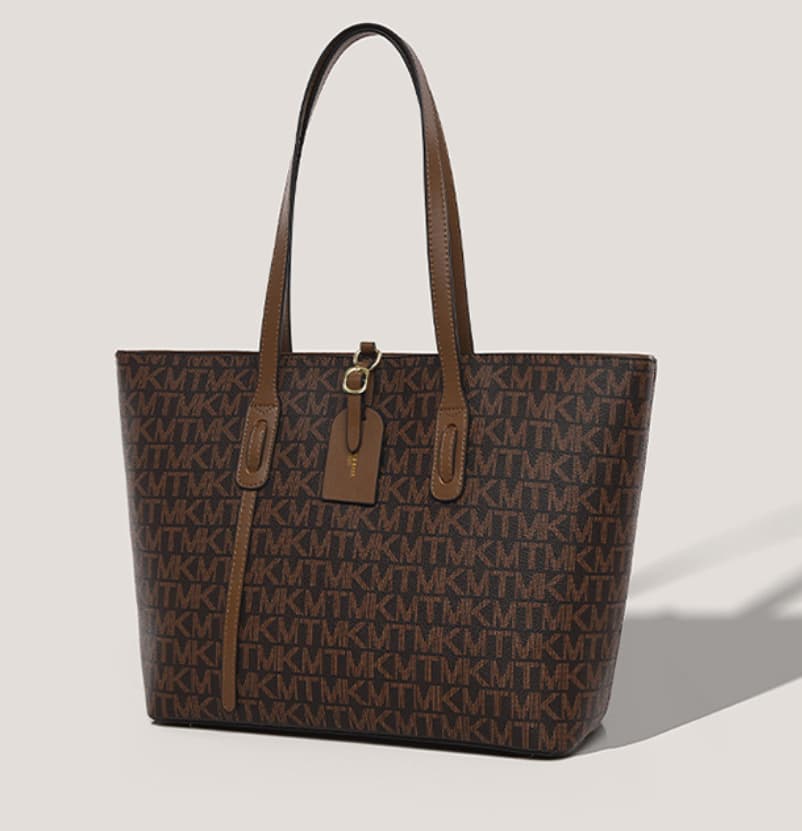
Categorisation of Mainstream Luggage and Bag Hardware Components and Selection Based on Application Scenarios
There is a wide variety of luggage and bag hardware components available. Different types of hardware correspond to distinct differences in bag structure, usage scenarios and product positioning. The first step in the procurement and selection process is to identify the appropriate components based on the type of finished bag, thereby avoiding selection errors that could lead to rework during prototyping and wastage of stock in mass production. Our factory specialises in a full range of leather goods hardware, covering both standard components and custom-moulded parts. The applicable scenarios for each category are as follows:
Connecting fasteners: D-rings, square buckles, semi-circular buckles, dog clips, hanging loops
Connecting fasteners are the most frequently used hardware components in rucksacks, ladies’ handbags, outdoor luggage and pet carriers. Their primary functions are to connect webbing, attach shoulder straps and fit accessories. The selection criteria for the various sub-categories are clearly defined:
D-rings
We manufacture D-rings in a semi-circular shape, available in both closed and adjustable varieties. design them for webbing assemblies on canvas bags, rucksacks, outdoor hiking rucksacks, and pet lead bags, where they offer stable load-bearing capacity and suit medium to large-sized bags. We use slim D-rings for light luxury ladies’ handbags and small clutches, while we select thick, high-hardness D-rings for heavy-duty outdoor luggage. offer standard materials including zinc alloy, iron, and brass. For large-volume, cost-effective orders, we recommend zinc alloy as the preferred choice, whereas we choose brass D-rings for high-end leather goods and light luxury handbags to enhance their quality and feel.
Square buckles
We design these with a square hollow structure, and we commonly use them for adjusting shoulder strap lengths and securing webbing. We often pair them with dog clips, and we see high demand for them in briefcases, business laptop bags, women’s commuter bags, and luggage straps Narrow-edged square buckles are suitable for women’s bags with thin shoulder straps, whilst wide, reinforced square buckles are suitable for large outdoor bags and pet carriers. When purchasing, please ensure the webbing width matches the corresponding internal width of the buckle.
Semi-circular buckles
Small, lightweight fasteners with a compact profile, frequently used on mini handbags, make-up bags, key pouches and small tag rings. Their lightweight design allows for brushed or antique bronze-plated finishes, catering to a minimalist, luxury-inspired aesthetic.
Lobster clasp
Featuring a spring-loaded opening mechanism, this is primarily used for the quick attachment and removal of shoulder straps and for hanging accessories; it is a standard component in the leather goods industry. Standard ladies’ handbags typically use small, slim lobster clasps, whilst outdoor luggage and pet carriers utilise thickened, reinforced spring-loaded lobster clasps, which offer stable spring tension and resist loosening even with repeated opening and closing; For export orders, customised rust-proof treatment for the springs is available to suit the humid conditions of sea transport.
Hanging hooks
We design these for attaching brand tags or decorative pendants to the exterior of bags, and we use them in conjunction with metal nameplates. We make them relatively small in size with a minimalist design, and we can customise them to incorporate a logo as an integrated metal component.
Closure fastenings: Luggage locks and magnetic fasteners
Luggage fastenings directly affect the user experience and anti-theft performance of the product. They are divided into two main categories: mechanical locks and magnetic fasteners, with the choice of type depending on the intended use of the luggage.
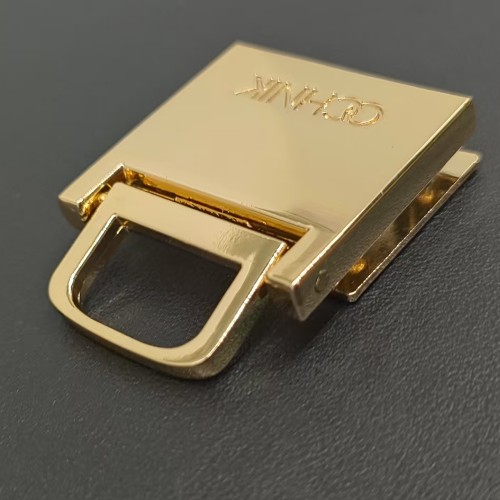
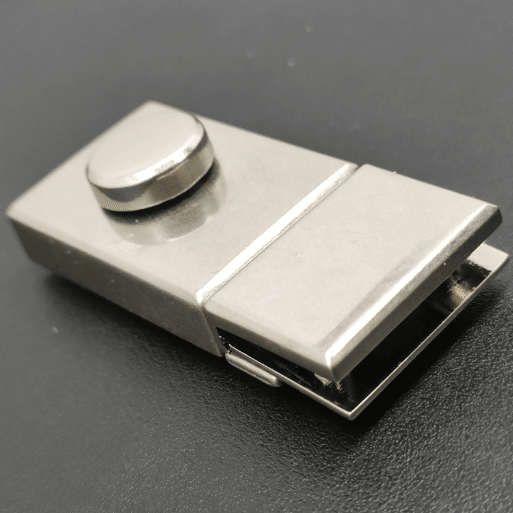
Luggage and bag fastenings: e categorise our metal clasp structures into slide locks, twist locks, and buckle locks. We design them for briefcases, business clutches, high-end gift boxes, leather goods, and handbags. We feature simple square slide locks on business briefcases, while we pair light-luxury women’s handbags with curved decorative clasps. For gift leather goods, we can customise exclusive locks bearing the brand logo, and we support custom moulding for unique designs. We craft the internal latch mechanism from thickened alloy, ensuring a secure grip that prevents accidental opening during daily use.
Magnetic Clasps: These rely on magnetic attraction to close, offering convenient opening and closing. They are currently the mainstream fastenings for women’s handbags, casual bags and make-up bags, and are categorised into single-sided magnetic and double-sided strong-magnet types. Slim, compact bags utilise thin, low-strength magnetic clasps, whilst large-capacity totes and outdoor bags employ thickened, high-strength magnetic clasps. The magnetic force is evenly distributed, preventing issues such as clasps being too tight to open or too weak to stay closed; for export orders, lead-free, magnetic-powder-free eco-friendly magnets compliant with ROHS testing standards are available.
 |  |
Fasteners and Reinforcement: Eyelets, Rivets, Corner Protectors, Luggage Bases
These hardware components reinforce the corners of luggage, secure webbing through punched holes, and provide wear-resistant protection for the base, thereby extending the lifespan of leather goods. They are essential functional accessories:
Eyelets (ventilation eyelets): Used for punching holes in webbing, handles on luggage and bags, and ventilation holes in rucksacks. Their hollow structure ensures that the fabric around the hole does not tear easily after installation. Small, thin-rimmed eyelets are used for women’s handbags made from thin PU leather, whilst thickened, wide-rimmed eyelets are used for canvas outdoor bags and work bags to prevent the fabric from tearing under strain.
Rivets: We offer rivets in solid and hollow specifications and use them for surface decoration on luggage, securing webbing, and reinforcing leather seams. can supply them as standalone decorative hardware or as part of a complete hardware set. We give brass rivets a finely textured electroplated finish, and we commonly use them in high-end genuine leather goods. We design zinc alloy rivets to offer excellent value for money, and we recommend them for budget-friendly, bulk luggage orders.
Corner protectors: Fitted to the four corners of bags to protect the leather from friction and wear; most commonly used on briefcases, hard-shell handbags and leather toolboxes. Right-angled corner protectors are suitable for square, rigid bags, whilst rounded corner protectors are suitable for soft-leather, light-luxury ladies’ handbags. The surface can be electroplated or spray-painted to match the colour scheme of the complete set of hardware.
Bag bases: These are supporting fittings for the base of bags, preventing direct friction between the base and the ground. They are available as single-piece bases or strip bases and are standard fittings for handbags, make-up cases and leather storage boxes. Thickened bases offer greater load-bearing capacity and are suitable for large-capacity leather storage items.
Brand Identity Products: Metal nameplates, customised logo hardware
Brand identity hardware is the key component that distinguishes ordinary luggage from branded leather goods. It can be customised with bespoke designs using dedicated moulds, or the brand logo can be etched or engraved onto the surfaces of buckles, D-rings and corner protectors:
Standard signage is categorised into flat metal nameplates, three-dimensional embossed signs and openwork logo signs. Materials include zinc alloy and brass, with surfaces available in a range of electroplated finishes to match the colour scheme of the complete set of luggage hardware. Overseas brand clients often opt for one-piece moulded logo fittings, which require no secondary adhesion, are wear-resistant and do not come off. For bulk purchases, all hardware components for the entire bag can be produced using a single mould, ensuring visual consistency across the entire set of fittings.
Comparison of Mainstream Materials for Luggage and Bag Hardware: A Guide to Material Selection for Procurement
Our factory routinely produces products using four materials: zinc alloy, iron, brass and eco-friendly alloys. These materials differ significantly in terms of cost, hardness, texture, suitable applications and international environmental standards. Before placing an order, it is essential to select the appropriate material based on the product’s positioning, budget and export requirements, to avoid quality issues arising from incorrect material selection.
Zinc alloy (the industry’s most commonly used material)
We use zinc alloy as the most widely used hardware material in domestic luggage and bag factories and for export orders. Its advantages include its low melting point, which allows us to mould complex three-dimensional shapes. We can cast embossed logos, irregularly shaped fasteners, and specially designed nameplates all as a single piece. We keep moulding costs moderate and the unit price per item affordable, making it suitable for high-volume, mass-market products such as budget women’s handbags, rucksacks, casual canvas bags, and pet carriers
Material properties: Medium hardness; resistant to deformation under normal daily use. When combined with compliant electroplating processes, a variety of surface finishes can be achieved, including nickel, antique bronze, black gold and electrophoretic black. Environmentally friendly zinc alloy raw materials comply with RoHS testing requirements, making them suitable for export orders to Europe and the US.
Target customers: Mid-to-low-end mass-production luggage manufacturers, cross-border e-commerce leather goods suppliers, and small-to-medium-sized brands sourcing ready-to-ship stock.
Iron (designed specifically for heavy-duty, cost-effective fittings)
Iron hardware offers superior load-bearing capacity to standard zinc alloys; at the same thickness, it is harder and less prone to bending or deformation. It is commonly used in heavy-duty functional fittings such as reinforced dog clips, wide square buckles, heavy-duty connectors for outdoor luggage, and luggage bases.
The drawback is that the iron substrate is prone to oxidation and rust, so we must treat it with a complete electroplated sealant coating. For coastal and humid regions, as well as international shipping orders, we require a thicker electroplated layer to enhance rust protection. We keep the overall cost lower than that of brass but higher than that of standard zinc alloys, making it suitable for procurement in industrial tool bags, outdoor rucksacks, and large-capacity pet carrier bags
The Material In Brass (a premium material for light luxury leather goods)
Brass has a refined metallic texture and a uniform electroplated finish; it is resistant to peeling and fading even with long-term use, and offers excellent corrosion resistance. The brass fittings are the preferred choice for high-end genuine leather handbags for women, luxury leather goods manufactured on a contract basis, and premium business briefcases. Brass can be finished using high-end techniques such as brushed natural finish, antique bronze and bright nickel, offering a substantial feel to the touch that enhances the overall quality of the luggage and bags.
The limitation lies in the relatively high cost of raw materials; the unit costs for moulding and processing are higher than those for zinc alloy and iron. It is therefore suitable for mid-to-high-end leather goods brands with higher price points. Brass is the material of choice for high-end leather goods export orders to Europe and the US, and it has a high pass rate in environmental compliance testing.
Eco-friendly Alloy (Low-lead, low-cadmium alloy specifically for international trade orders)
This eco-friendly alloy is a modified zinc alloy, with strict control over the levels of lead, cadmium, mercury and other heavy metals in the raw materials. Third-party environmental testing reports are provided upon dispatch, ensuring full compliance with EU RoHS and US export environmental standards. It is tailored for cross-border e-commerce, overseas brand procurement and large-volume international trade orders. Its formability is comparable to that of standard zinc alloys, making it suitable for producing various custom-shaped fasteners and logo plaques. There is no need to worry about goods being detained by customs due to environmental compliance issues, making it the preferred material for international trade procurement.
Quick Reference Guide to Material Selection
Affordable, high-volume domestic luggage: standard zinc alloy
Functional fastenings for heavy-duty outdoor and workwear luggage: iron
High-end genuine leather and premium lifestyle brand leather goods: brass
Cross-border exports and orders for the European and American markets: eco-friendly alloy
A Detailed Guide to Surface Finishes for Luggage Fittings: Matching Electroplating Solutions to Product Styles
The surface finish of fittings directly determines their aesthetic appeal, wear resistance and rustproofing capabilities. Our factory’s standard finishes include nickel plating, antique bronze, black gold, electrophoretic black, brushed finish, spray coating and hypoallergenic, eco-friendly electroplating. We suit different finishes to different luggage styles. When purchasing a complete set of fittings, we recommend selecting a uniform finish colour scheme to ensure a harmonious appearance.
Electroplated nickel (bright nickel / matt nickel)
We offer bright nickel with a glossy, mirror-like finish and a clean, minimalist look, making it ideal for business briefcases and minimalist women’s commuter bags, and also produce matt nickel with a low-gloss, low-reflective finish that is understated and sophisticated, and have seen it widely used in recent years for casual luggage and minimalist leather goods. apply nickel plating as a stable rust-proofing process and use it as a standard process for domestic orders. can treat eco-friendly nickel plating to be hypoallergenic, meeting the requirements for handbags carried close to the body.
Antique Bronze Plating (Blue-Green Antique Bronze, Red Antique Bronze)
A specialised process for vintage-style designs, featuring a surface finish that creates an aged effect to produce a vintage metallic sheen. This is the standard finish for vintage-style handbags, workwear canvas bags and distressed genuine leather luggage. When applied to a brass substrate, the antique bronze finish offers superior texture compared to zinc alloy. The entire set of fastenings, D-rings and rivets is finished in a uniform antique bronze colour, creating a stronger sense of visual cohesion.
Black Gold Plating
A black base with a subtle metallic sheen, combining the understated texture of black with the delicate grain of metal. This is the mainstream finish for light luxury ladies’ handbags, gift-box leather goods and high-end make-up bags. Compared to pure black electrophoresis, it offers greater depth and is less likely to appear cheap.
Electrophoretic Black
A pure matt black finish with strong coating adhesion and excellent resistance to wear and scratches. The preferred choice for functional hardware on outdoor luggage, work bags and pet carriers, it offers superior abrasion resistance compared to standard spray-painted finishes. The coating is unlikely to wear through even with long-term use, making it a common process for high-volume, budget-friendly luggage.
Brushed Finish
Available in brushed brass and brushed zinc alloy, this finish retains the metal’s natural grain without any additional plating. Designed specifically for minimalist, industrial-style leather goods, it is used on nameplates, D-rings and corner protectors, eliminating concerns about surface colour fading.
Spray-Coating Process
Customisable coloured hardware (black, beige, brown, etc.) is available, suitable for coloured PU and canvas bags. The surface is coated with a protective lacquer, making it a low-cost option; however, a drawback is that prolonged friction may cause slight paint chipping, making it unsuitable for frequently used locks and dog clips. It is primarily used for decorative nameplates and corner protectors.
Hypoallergenic, Eco-Friendly Electroplating
Designed specifically for custom-made clutch bags, children’s luggage and bags for mothers, babies and pets, the electroplated finish contains no irritating heavy metals and poses no risk of allergic reactions even with prolonged skin contact. It has also passed ROHS environmental testing and is the designated process for leather goods for mothers and babies, as well as children’s luggage for export.
Selection guides for luggage hardware across different categories, ready for designers to apply directly
As luggage designed for different purposes varies in structure, load-bearing capacity and positioning, there are established industry-specific guidelines for hardware selection. Leather goods designers and buyers can refer directly to these selection guides to minimise the costs associated with trial-and-error prototyping.
Women’s casual bags, totes and clutches
- Key hardware components: small magnetic clasps, slim D-rings, mini dog clasps, slim square clasps, rounded corner protectors, small logo plaques, small rivets
- Recommended materials: eco-friendly zinc alloy / brass
- Recommended finishes: matt nickel, black gold, light antique bronze
- Functional requirements: lightweight, refined appearance; hardware of moderate thickness that does not add to the bag’s weight.
Business briefcases, laptop bags
- Key hardware components: square insert buckles, wide square buckles, reinforced D-rings, right-angled corner protectors, elongated bag bases, flat metal nameplates
- Recommended materials: iron (load-bearing fastenings) + brass (lock and nameplate hardware)
- Recommended finishes: Polished nickel, matt electrophoretic black
- Functional requirements: Sturdy and hard-wearing; locks engage securely; reinforced base to prevent wear and tear; suited to a dignified, professional business style
Backpacks, outdoor rucksacks, work bags
- Key hardware components: reinforced dog clips, wide D-rings, large eyelet grommets, heavy-duty webbing buckles, strong magnetic clasps, reinforced bag bases
- Recommended materials: iron, reinforced eco-friendly zinc alloy
- Recommended finishes: electrophoretic black, matt nickel
- Functional requirements: high load-bearing capacity, rust-resistant, tear-resistant; spring buckles with long-lasting elasticity; resistant to rust in challenging outdoor environments.
Pet bags and pet carrier bags
- Key hardware components: reinforced spring dog clips, wide D-rings, webbing adjustment buckles, reinforced rivets, rust-proof bases
- Recommended materials: iron + eco-friendly alloy; thickened rust-proof electroplating is preferred
- Recommended finishes: electrophoretic black coating, thickened glossy nickel anti-rust coating
- Functional requirements: High load-bearing capacity; resistance to moisture; resistance to oxidation despite prolonged exposure to pet saliva and outdoor rain.
Gift-box leather goods, premium genuine leather storage bags
- Key hardware components: bespoke embossed buckles, raised logo plaques, brass rivets, rounded corner protectors, slim magnetic fasteners
- Recommended material: brass
- Recommended finishes: brushed, red patina, hypoallergenic eco-friendly plating
- Functional requirements: premium feel, colour-coordinated hardware set, custom moulding for bespoke designs
The Complete Process for Custom Moulding of Luggage Hardware: A B2B Procurement Guide for Custom Orders
When off-the-shelf standard hardware fails to meet a brand’s specific requirements, you may opt to commission custom moulding of logo hardware based on your drawings or samples. Our factory supports the entire moulding and production process, which is clear and transparent. This enables procurement teams to manage lead times and sample milestones in advance, thereby avoiding delays in custom orders.
Pre-production Communication and Confirmation Stage
The client provides the following materials: actual product photographs, 2D drawings of metal fittings, design renderings, and vector files of the brand logo; if no drawings are available, physical samples may be provided for the factory to reverse-engineer the dimensions.
Confirmation of key parameters: hardware material, surface plating process, overall dimensions, thickness, logo finish (etched / embossed / cut-out), environmental compliance requirements (ROHS compliance required), and minimum order quantity per model.
Quotation: A quotation will be provided based on moulding complexity, materials, processes and order volume. We will itemise moulding costs separately, and we may negotiate a refund policy for moulding costs on repeat bulk orders
Mould Production and Prototyping Stage
Mould Development: We produce steel moulds in accordance with the approved drawings.. The lead time for standard moulds is 3–7 days, whilst complex relief or irregular-shaped lock moulds take 7–15 days.
Unplated Prototype Testing: We cast unplated metal blanks to verify dimensions, design, and logo clarity. Once the client has confirmed these are correct, we apply surface plating to produce the finished prototype
Dispatch of Finished Samples: Once we complete plating, we dispatch 2–5 finished figurine samples.The client verifies the appearance, magnetic strength, the feel of the fasteners opening and closing, and the colour scheme. Once we approve the samples, we seal and retain them as reference samples, and we carry out mass production strictly in accordance with these approved standards.
Mass Production, Quality Control and Dispatch
Batch Casting: We mass-produce metal blanks using approved moulds, then we subject them to standardised electroplating. We colour-match the entire hardware set simultaneously to prevent colour discrepancies.
Pre-shipment Quality Control: A three-stage inspection process comprising dimensional verification, screening for surface defects in the plating, load-bearing and opening/closing tests, and random environmental compliance testing. We issue test reports concurrently for export orders.
Packaging and Dispatch: We package items separately by model to prevent scratches during transit. For large-volume orders, we can arrange delivery in batches to accommodate clients’ requirements for brand-specific warehousing and stock management.
Key Points to Avoid Common Pitfalls in the Procurement of Luggage Hardware: Minimising Losses for Factories
Over many years of B2B supply, numerous luggage manufacturers and international trade buyers have encountered issues such as bulk returns, customer claims and customs seizures due to inadequate attention to detail regarding product selection, manufacturing processes, environmental compliance and quality control. We have compiled a list of common procurement pitfalls in the industry; please ensure you check these carefully before placing an order.
Common Misconceptions Regarding Material and Plating Matching
Some low-cost suppliers substitute thick-gauge materials with thin-gauge zinc alloys, resulting in load-bearing fasteners bending and deforming after use; iron hardware with excessively thin plating layers may rust after 2–3 months of sea transport. When placing purchase orders, clearly specify the material thickness and number of plating layers; retain samples from the prototyping stage to compare thickness and rust-proofing effectiveness against the bulk production run.
Failure to Agree on Environmental Standards in Advance
Domestic sales orders typically have less stringent environmental requirements; however, export orders to Europe, the US and Japan are subject to mandatory ROHS heavy metal controls. If we do not select environmentally compliant alloys and plating in advance, customs may detain our goods upon arrival at the port, resulting in substantial demurrage charges. For export procurement, it is essential to confirm the environmental compliance rating of raw materials before placing an order and to require the manufacturer to provide third-party test reports.
Colour Variation Issues with Complete Sets of Metal Fittings
When we electroplate the same type of buckles, D-rings, and rivets in separate batches, colour variations can easily occur between different plating runs, resulting in a visually inconsistent appearance for the complete leather goods set. For large-volume orders, we recommend that we electroplate the entire set of metal fittings in a single batch. When we place custom orders, we should confirm colour swatches simultaneously, and we should retain samples to establish colour standards.
Neglect of Functional Parameters for Fastenings
We must test the strength of magnetic closures, the spring tension of dog clips, and the weight capacity of D-rings. Relying solely on appearance can cause after-sales issues such as magnetic closures coming undone, fastenings breaking, or shoulder straps detaching after we have delivered the finished bags to the customer. During the prototyping stage, we must carry out repeated opening-and-closing tests, as well as pulling and weight-bearing tests that simulate everyday use..
Moulding Rights and Design Issues
For customised logo hardware, the client must provide brand trademark authorisation documents; without authorisation, the factory will not undertake logo moulding to avoid infringement disputes. We must agree on the ownership of self-commissioned moulds in writing in advance to prevent subsequent design disputes
Standards for Hardware Components in Export Luggage and Bags, and Supply Guidelines for ROHS-Compliant Environmental Processes
The procurement of leather goods for export is one of our factory’s core business areas. Overseas customers have far higher requirements regarding the environmental friendliness, rust resistance and packaging of hardware components than those for domestic orders. We summarise the specific standards for export orders below:
Raw Material Standards: We manufacture all products using eco-friendly alloys or brass, and we strictly control the levels of heavy metals such as lead, cadmium, and hexavalent chromium. We provide a RoHS test report for each batch, and we support third-party retesting by customers.
Electroplating Process: All products utilise hypoallergenic, eco-friendly electroplating free from harmful plating substances. For orders shipped by sea to coastal regions, we apply a thicker anti-rust plating layer to withstand the high-temperature, high-humidity conditions of container transport
Product Packaging: We bag each item individually in OPP, sort complete hardware sets by category into unified packs, and apply a protective oil coating to prevent surface damage during long-haul transport. also offer unbranded, logo-free packaging for cross-border white-label retailers
Suitable Product Categories: We pair compliant hardware with European and American light-luxury women’s handbags, outdoor camping luggage, pet care bags, and children’s and maternity leather goods for international trade. We support both small-batch sample orders and large-volume repeat orders
Bulk Procurement and Supporting Services from the Manufacturer
As a manufacturer specialising in luggage hardware, we operate without any mark-ups from intermediaries. We provide one-stop hardware supply services to luggage manufacturers, leather goods brands, foreign trade companies and cross-border suppliers, covering the full range of standard off-the-shelf parts and custom moulded components.
Wholesale stock: We stock thousands of styles of D-rings, square buckles, dog clips, magnetic fasteners, rivets, corner protectors, and nameplates. We can dispatch standard styles the same day to meet customers’ urgent replenishment needs.
Customisation based on drawings or samples: We undertake moulding for all types of custom-shaped hardware and hardware featuring bespoke logos. Our designers can work with clients to adjust hardware dimensions and optimise designs to suit the structure of leather goods.
Complete hardware packages: We provide a one-stop solution for all hardware required for a single bag or case—including locks, hooks, reinforcement hardware and brand nameplates—ensuring consistent craftsmanship and colour matching, thereby reducing the costs associated with liaising with multiple suppliers.
Quality Control: All hardware dispatched undergoes triple quality inspection covering appearance, dimensions and functionality. Hardness meets standards, and under standard compliant electroplating processes, the surface is unlikely to peel or fade during normal use.
Flexible Cooperation Models: We support small-batch sample production, long-term bulk procurement for brands, and stable repeat orders for international trade. We adjust production schedules according to the scale of the client’s order to ensure stable delivery times.
Conclusion
Although luggage hardware is a small accessory for leather goods, it directly affects the quality of the finished luggage, customer repeat purchase rate, and brand reputation. During procurement and selection, we match materials and processes based on luggage positioning, usage scenarios, and domestic or export environmental regulations. Depending on requirements, we can choose either standard stock parts or custom-molded logo hardware. At the same time, we control the sample-sealing and factory inspection processes. These measures significantly reduce production rework, after-sales losses, and risks associated with foreign trade customs clearance.
This article covers the full range of luggage hardware selection, material and process comparison, customization process, procurement pitfalls avoidance, and complete practical knowledge on foreign trade environmental protection norms. Leather goods designers and procurement managers can save it as a daily selection reference document. If you need targeted product matching solutions, we can provide a special selection plan for connecting with factories based on luggage styles and order requirements.

oyc
High Quality metal fitting, Dog Hook, Metal Ring,customer made Logo Plate