A Comprehensive Guide to the Entire Process of Custom Mould Making for bag Hardware: Procurement and Selection, Manufacturing Standards and a Guide to Avoiding Pitfalls
In the brand manufacturing and foreign trade processing sectors of the luggage, leather goods and handbag industries, standardised hardware fittings often fail to meet the design requirements of niche products such as high-end leather goods, bespoke luggage, functional outdoor bags and pet carriers. Conventional off-the-shelf fittings—such as D-rings, square buckles, magnetic fasteners and latches—generally suffer from poor dimensional compatibility, a lack of design differentiation, substandard craftsmanship and environmental parameters that fail to meet international trade standards. These issues are the primary reasons why an increasing number of branded luggage manufacturers, international trade buyers and leather goods manufacturers are opting for bespoke moulding services for bag hardware.
Custom moulding for luggage and bag hardware is a production model that relies on the moulding capabilities of source factories to create bespoke hardware components based on product design drawings and sample specifications. It can meet the hardware requirements for a full range of products, including rucksacks, ladies’ handbags, briefcases, outdoor luggage and high-end leather goods. However, for B2B procurement professionals, leather goods designers and factory managers, the custom moulding process involves numerous details—including material selection, process matching, mould parameters, environmental standards and mass production. Even the slightest oversight can lead to issues such as non-compliant fittings, colour variations in batches, dimensional deviations and failure to pass international trade inspections, resulting in project delays and cost overruns.
Starting from the practical pain points of B2B procurement, this article provides a comprehensive guide to the applicable scenarios for custom moulding of bag hardware, material selection criteria, mainstream surface finishes, the complete customisation process, key points to avoid pitfalls in procurement, and specific compliance requirements for international trade. It aims to offer professional and actionable guidance for hardware procurement by luggage manufacturers of all types.
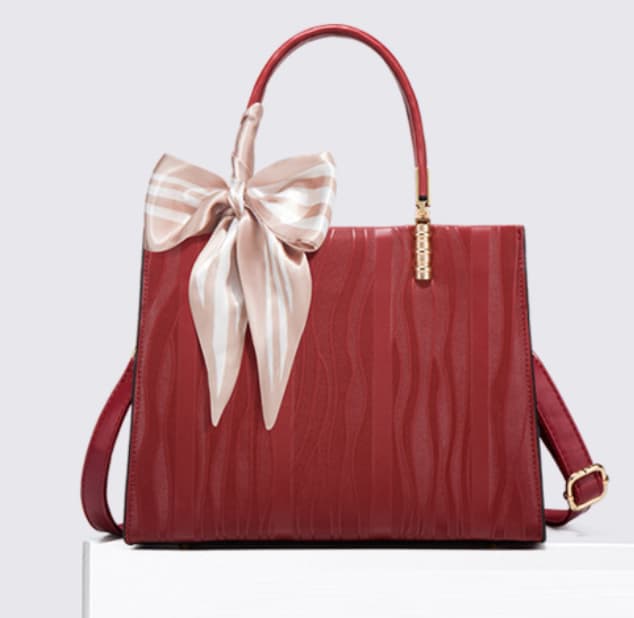
Key Applications for Custom Moulding of Luggage and Bag hardware: Say Goodbye to the Limitations of Off-the-Shelf Solutions
Most small and medium-sized luggage manufacturers initially opt for off-the-shelf bag hardware fittings to reduce procurement costs; however, as brands evolve, products become more differentiated and innovative, and export orders increase, the limitations of off-the-shelf fittings gradually become apparent. Custom moulding is not the exclusive preserve of high-end brands; in the following scenarios, opting for custom moulding is a more suitable and cost-effective choice than purchasing off-the-shelf fittings.
Firstly, there is a demand for product differentiation through design
In today’s luggage market, where competition is fierce due to a high degree of product homogeneity—be it in the segments of affordable luxury handbags, business briefcases, functional outdoor luggage or pet carriers—unique hardware designs, logo-embossed hardware, exclusive fastenings and custom-shaped corner protectors are key features that enhance a product’s quality and distinctiveness. Standardised off-the-shelf bag hardware designs fix shapes and cannot accommodate designers’ original concepts. Bespoke moulding, however, enables the creation of irregular-shaped hardware, D-rings with customised curves, personalised hanging loops and bespoke hardware plaques, and perfectly complements the product’s design aesthetic
Secondly, there are scenarios involving non-standard dimensions
The fabric thickness, structural design and load-bearing standards vary greatly across different categories of luggage and bags. For example, outdoor luggage requires high-load-bearing dog clips and reinforced square buckles; ultra-thin, luxury leather goods require lightweight micro-rivets and slim corner protectors; whilst pet carriers require special-specification webbing fasteners that are rust-resistant and wear-resistant. Off-the-shelf hardware components follow generic standards, which can easily lead to problems: fasteners loosen, overly thick rivets pierce through the fabric, and protruding hardware scratches the material .Custom moulding allows for precise matching to the product’s dimensional specifications, ensuring a perfect fit and reliable performance.
Furthermore, there are scenarios involving international trade orders and bulk purchases by brands
Cross-border trade and bulk orders from brands place extremely high demands on bag hardware components in terms of environmental standards, consistency of workmanship, wear resistance and uniformity of appearance. Off-the-shelf hardware typically undergoes mass production for general use. Different batches may exhibit colour variations, manufacturing defects or material inconsistencies, and they fail to meet brand quality control requirements and ROHS environmental testing standards for international trade. Custom moulding allows for the standardisation of mould parameters, material specifications and manufacturing processes, ensuring that hardware components for large-volume production exhibit zero colour variation, consistent specifications and full compliance with regulatory standards.
Finally, there are the requirements for special functional performance scenarios
High-end leather accessories require precise magnetic attraction force and a structure to prevent accidental opening. The bottom of the luggage needs a non-slip and anti-pressure structure. Outdoor bag hardware needs rust-proof and corrosion-resistant properties. General ready-made products cannot meet these special-function hardware requirements. Bespoke mold-making must adjust the structure and process parameters to adapt to the exclusive functional requirements of the products
A Guide to Selecting Materials for Custom Luggage Hardware, Tailored to the Requirements of Different Luggage Categories
The material is the key factor determining the hardness, wear resistance, rust resistance, environmental rating and service life of bag hardware fittings; it is also the primary consideration when selecting materials for custom moulding and procurement. As a manufacturer at the source, our factory routinely offers customised materials across four main categories: zinc alloy, iron, brass and eco-friendly alloys. The performance, suitability for different applications and manufacturing results vary significantly between these materials, allowing B2B buyers to select the most appropriate option based on product positioning and order requirements.
Zinc alloy (the most commonly used material for custom-made hardware)
Zinc alloy leads luggage hardware customisation. Its excellent malleability enables complex, irregular shapes, fine logos and ultra-thin designs—ideal for locks, fasteners, D-rings, plaques and corner protectors. It offers moderate hardness, deformation resistance, consistent wear resistance and adapts well to electroplating, painting or brushing for premium finishes. With strong cost-performance, it is the top choice for mid-to-high-end, export and bulk brand orders
Iron (a high-load-bearing material essential for heavy-duty applications)
Iron bag hardware offers high hardness, excellent load-bearing capacity and structural stability, and is primarily used for the customisation of functional, heavy-duty luggage and bag fittings. It is mainly suited to products requiring high load-bearing capacity, such as outdoor luggage, work bags, large travel bags and pet carriers, and is commonly used for customised reinforced dog buckles, reinforced webbing buckles, high-strength square buckles and luggage bases. Iron is a cost-effective material, offering excellent value for money in bulk customisation. Its rust resistance can be enhanced through processes such as electroplating and electrophoretic black coating, making it fully suitable for everyday luggage use and a cost-effective choice for customising functional luggage hardware.
Brass (a premium, light-luxury bespoke material)
Brass boasts a sophisticated texture, a warm lustre and excellent resistance to oxidation; it is resistant to rust and fading, and offers fine malleability with crisp, defined patterns. It is primarily used for high-end light-luxury leather goods, bespoke ladies’ handbags and luxury-grade luggage hardware. It is commonly used for high-end clasps, intricate logo fittings, decorative hangers, vintage-style corner protectors and other decorative and functional accessories. Brass offers excellent adaptability to various finishing techniques; finishes such as antique patina, brushed and polished produce outstanding results. Its overall quality far exceeds that of standard alloys, making it ideal for product upgrades by high-end brands and niche, light-luxury bespoke orders.
Eco-friendly alloy material (material specifically compliant with international trade regulations)
This eco-friendly alloy is a compliant material developed specifically for the international export market. It is fully compliant with the EU RoHS environmental standards, supports hypoallergenic eco-friendly electroplating processes, contains no heavy metals exceeding regulatory limits, and can successfully pass all relevant international environmental testing. The material offers excellent toughness and is resistant to cracking. It features highly stable surface finishes that do not fade or peel, making it particularly suitable for export orders for luggage and bags destined for markets such as Europe, the US and South-East Asia, as well as bespoke orders from brands with stringent environmental requirements. It is the core compliant material for bespoke hardware in the export sector.
An Analysis of Mainstream Surface Finishing Techniques for Customised Bag Hardware: Distinguishing Between Process Variations and Suitable Applications
The surface finishing techniques for customised bag hardware directly determine the appearance, wear resistance, rust resistance and overall quality of the components. They are also the area in the procurement process where confusion occurs most often and pitfalls lie most frequently. Our factory offers standard, well-established processes including nickel plating, antique bronze, black gold, electrophoretic black, brushed finish, spray coating, and hypoallergenic eco-friendly plating. Each process delivers different visual effects, performance characteristics and suitable applications, so you must make procurement decisions with precise consideration of your product’s positioning.
The nickel plating process is a fundamental, general-purpose technique.
It produces a smooth, even surface with a uniform lustre and offers reliable rust protection. Suitable for a wide range of standard luggage and handbag hardware fittings, it offers excellent value for money and utilises a well-established process, making it ideal for regular, bulk custom orders. The antique bronze finish is available in colour ranges such as antique bronze, red antique bronze and blue antique bronze. With its rich, vintage texture, it is primarily suited to retro-style leather goods, casual ladies’ handbags and vintage briefcases. Highly decorative, it is a popular choice for stylised bespoke luggage.
The Black Gold finish offers a premium, understated and refined appearance
The plating has strong adhesion and is scratch-resistant, making it suitable for mid- to high-end ‘light luxury’ luggage and business leather goods. Balancing aesthetics with practicality, it is currently the mainstream choice for hardware finishes in branded luggage. The core advantages of the electrophoretic black finish lie in its thick coating and exceptional adhesion; it is wear-resistant, scratch-resistant and corrosion-resistant, with excellent waterproof and rust-proof properties. This process primarily serves the customisation of hardware on products subject to frequent use and friction, such as outdoor luggage, functional bags and work bags, and delivers far greater process stability than standard spray-painting techniques.
The brushed finish produces a delicate metallic texture with a three-dimensional feel;
it is fingerprint-resistant and offers excellent wear resistance. It is ideal for business briefcases, minimalist yet luxurious luggage, and bespoke high-end metal nameplates, creating an overall style that is both simple and sophisticated. The spray-painting process offers a rich colour palette and strong coverage, allowing it to complement the overall colour scheme of the luggage. We suitable apply it to customise colourful, personalised metal fittings, and we frequently use it for niche designs and trendy luggage products.
Hypoallergenic, eco-friendly electroplating is a bespoke process exclusively for the export market
It utilises environmentally friendly electroplating materials and production processes throughout, leaving no heavy metal residues. It has passed ROHS environmental testing, is hypoallergenic and free from the leaching of harmful substances, making it suitable for luggage orders destined for Europe, the US, Japan and South Korea, and fully compliant with overseas market access standards. We standardise production parameters across all processes to ensure that mass-produced customised products maintain consistent finish, with no colour variations or defects.
The Complete Process for Custom Moulding of Luggage and Bag Hardware: Facilitating Efficient Procurement and Implementation
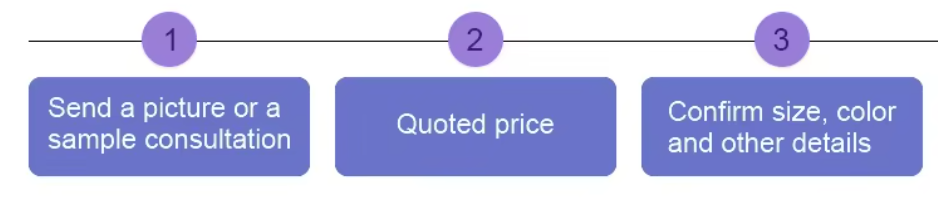
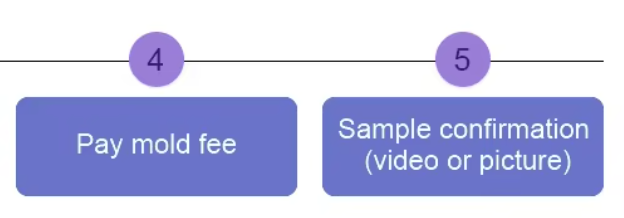
Many B2B buyers and designers encounter issues such as inefficient coordination, repeated sample revisions and delays in production schedules when undertaking custom bag hardware moulding for the first time, due to a lack of familiarity with the process. A standardised custom moulding process is key to ensuring the quality, lead times and precision of components. As a source manufacturer, our factory possesses a mature custom production system with a clear and well-defined process, capable of accommodating both large-scale custom orders and small-batch moulding requirements.
 |
  |
 |
Step 1: Requirements Alignment and Parameter Confirmation
The purchaser provides design drawings, physical samples and a product requirements specification, clearly outlining key information such as accessory categories, materials, dimensions, surface finishes, usage scenarios, order quantities and environmental standards. The factory’s specialist technical team assesses the feasibility of the parameters based on the luggage product’s structure, spots any design inconsistencies or unmanufacturable details, and offers professional optimisation solutions to prevent later prototype rework.
Step 2: Mould development and prototype production of bag hardware
Once we finalise the requirements, the factory starts developing bespoke moulds. We manufacture precision moulds according to the structure, dimensions and texture of the customised components, and strictly control mould accuracy to meet production standards for bag hardware. After mould completion, we conduct a small-batch trial production run to produce finished prototypes that fully replicate the materials, craftsmanship, design and dimensions
Step 3: Sample approval and fine-tuning of details of bag hardware
The sample is delivered to the purchaser for verification. The purchaser conducts physical fit-and-finish testing in conjunction with the luggage products to verify key parameters such as dimensional accuracy, appearance and workmanship, load-bearing capacity, and magnetic strength. Should any minor deviations be identified, the technical team makes targeted adjustments to the moulds and production processes until the sample fully meets the purchaser’s requirements. Both parties then sign off on the sample specifications, which serve as the basis for mass production.
Step 4: Large-scale mass production of bag hardware
Once we confirm the prototype is correct, we commence large-scale standardised production. Throughout the entire process, we keep mould parameters, material ratios, process flows and production procedures constant to ensure that every batch of hardware fittings maintains highly consistent dimensions, appearance and performance, with no colour variation or dimensional deviations between batches
Step 5: Quality Inspection and Dispatch Of Bag Hardware
Once production is complete, the factory conducts a comprehensive quality inspection, including dimensional accuracy checks, screening for manufacturing defects, hardness testing, wear resistance testing and random environmental compliance testing.We reject all substandard and defective items, package the compliant products uniformly, and dispatch them to ensure delivery quality.
A Core Guide to Avoiding Pitfalls in Custom Mould Procurement For Bag Hardware: Addressing Common Pain Points in B2B Procurement
Entry barriers in the custom mould manufacturing sector for bag hardware vary considerably. Some small workshops suffer from issues such as low mould precision, production process shortcuts, substandard materials passed off as high-quality, environmental non-compliance, and inconsistent batch quality—all of which cause significant losses for purchasing companies. Drawing on many years of B2B service experience, we have summarised five key points to help buyers avoid these pitfalls and reduce the risks associated with custom orders.
Firstly, reject vague material specifications and clarify material standards
Many suppliers merely specify ‘alloy’ in their quotations without clarifying the specific alloy type. During production, they substitute the customised material with low-cost, inferior alloys, resulting in hardware that fails to meet hardness standards, is prone to deformation and rust, and fails environmental compliance tests. When procuring customised products, it is essential to clearly specify the exact material (zinc alloy, brass, eco-friendly alloy or iron) prior to entering into a partnership and to include this in the terms of cooperation. Upon receipt of the goods, random sampling can be carried out to verify material parameters, thereby preventing the substitution of inferior materials for superior ones.
Secondly, prioritise mould precision and avoid choosing rudimentary moulds
To cut costs, some small workshops use rudimentary moulds in production; insufficient mould precision leads to significant dimensional deviations in batch production, poor component compatibility, blurred textures and numerous burrs on edges and corners. Luggage hardware components require extremely high precision. For precision fittings such as locks, magnetic fasteners and rivets, we choose precision moulding to ensure accurate dimensions and an excellent fit in the finished products.
Thirdly, distinguish between standard processes and environmentally friendly processes for export
Conventional electroplating processes fail to meet export standards and pose a risk of exceeding heavy metal limits. Because many purchasers do not understand these processes, they commission standard-process hardware, which results in export order returns and customs detention. For customized export orders, you must specify in advance the requirement for ROHS-compliant and hypoallergenic electroplating, and request environmental compliance test reports to ensure compliant export.
Fourthly, confirm consistency in mass production processes to avoid colour discrepancies and defects
The most significant issue with custom-made metal fittings in mass production is colour variation between batches and inconsistent processing. Some factories produce high-quality samples for small orders but cut corners during mass production, resulting in problems such as uneven plating thickness, noticeable colour differences and peeling paint. Purchasing departments must confirm the factory’s quality control procedures for mass production in advance, establish clear standards for consistent batch quality, and retain samples as a basis for inspection.
Fifth, select materials based on the product’s intended use, rather than blindly pursuing high-end materials.
Many purchasers fall into the trap of selecting materials inappropriately: for example, they may unnecessarily opt for brass in low-end, practical luggage, resulting in excessively high procurement costs; conversely, they may choose ordinary alloys for heavy-duty outdoor luggage, leading to hardware that is prone to breaking and insufficient load-bearing capacity. When selecting materials for customised products, it is essential to match the materials and manufacturing processes to the product’s positioning, intended use and load-bearing requirements, whilst striking a balance between quality and cost control.
Specific Compliance Requirements for Customised Luggage Hardware in the International Trade Sector, Aligned with Export Order Standards
As the international luggage trade continues to develop, overseas markets are imposing increasingly stringent environmental, safety and performance standards on luggage hardware components. Mandatory requirements for international trade orders include the EU RoHS Directive, California Environmental Protection Standards in the US, and import access standards in Southeast Asia. To meet the customisation requirements of international trade procurement, source manufacturers must strictly adhere to specific production standards to ensure the smooth export of orders.
Firstly, compliance with environmental standards: for export orders, we prioritise the use of compliant materials such as eco-friendly alloys, high-purity zinc alloys and brass, whilst strictly avoiding inferior recycled alloys. This allows us to control heavy metal content at source, ensuring that levels of harmful substances such as lead, mercury and cadmium comply with international environmental standards. Secondly, there is compliance with manufacturing processes. All hardware components for export utilise hypoallergenic, eco-friendly electroplating processes, leaving no harmful plating residues. The plating exhibits strong adhesion and is resistant to rust and flaking in the humid conditions of sea transport, making it suitable for long-distance transport and overseas warehousing requirements.
At the same time, customised hardware for export must guarantee consistent performance. In response to overseas quality inspection standards for high-frequency returns and exchanges, we have strengthened testing of hardware hardness, wear resistance and rustproofing performance. This ensures that snap fasteners open and close smoothly, D-rings maintain stable load-bearing capacity and rivets remain securely fastened, thereby preventing after-sales disputes arising from hardware quality issues. Furthermore, the factory can provide comprehensive environmental testing reports and product certification documents to meet various audit requirements, including overseas customs clearance, brand quality inspections and retail chain onboarding.
Core Advantages of Customisation Directly from the Manufacturer, Tailored to Brands’ Bulk Procurement Needs
Compared to intermediaries and traders, custom moulding by source-factory manufacturers of luggage and leather goods hardware offers end-to-end advantages, making it better suited to the bulk procurement and customisation needs of brand companies, foreign trade firms and large-scale processing plants. Our factory has specialised in luggage and leather goods hardware for many years, possessing full-chain capabilities in in-house moulding, production and quality inspection; our core strengths align with the key requirements of B2B procurement.
Firstly, our in-house mould-making capabilities enable us to offer customisation based on provided drawings or samples. We can rapidly develop moulds for various irregularly shaped hardware components, logo-embossed hardware and non-standard-sized fittings, with short lead times and high precision, catering to a wide range of original designs and non-standard product requirements.
Secondly, we ensure quality compliance and control. All products pass environmental testing; material hardness meets specifications, plating is stable and colourfast, and batch quality is consistent with no deviations, thereby eliminating issues such as defects, colour discrepancies and dimensional inaccuracies.
Thirdly, we offer a comprehensive range of products suitable for all categories, providing customisable production of luggage fasteners, dog clips, webbing buckles, eyelet rivets, corner protectors, hanging loops, D-rings, square buckles, semi-circular buckles, magnetic fasteners, luggage bases, metal nameplates and custom-logo hardware, amongst other full-range luggage and leather goods hardware. This one-stop procurement service reduces the costs associated with sourcing and coordination.
Fourthly, we cater for bulk orders, supporting customisation for both small and large orders as well as wholesale production. With ample production capacity and reliable delivery, we can meet the needs of brands for long-term bulk procurement and the fulfilment of large export orders.
Fifthly, we offer a mature and diverse range of finishing processes, covering conventional electroplating, antique bronze, black gold, electrophoretic black, brushed finishes, spray coating and eco-friendly electroplating. We can customise unique finishes and performance characteristics to suit the product’s positioning, catering to a full range of product categories including high-end leather goods, outdoor luggage, casual ladies’ handbags, briefcases and pet carriers.
Summary
Custom moulding for luggage hardware is the core solution for luggage brands seeking to differentiate and upgrade their offerings, ensure compliance with international trade orders, and achieve precise matching for non-standard products. For B2B procurement, the crux of custom procurement lies not in low prices, but in material compatibility, process compliance, dimensional accuracy and consistent batch production. A thorough understanding of material selection, process variations, customisation workflows, key pitfalls to avoid and international trade compliance standards can effectively mitigate procurement risks, reduce production costs and enhance product quality and market competitiveness.
Standardised custom moulding services provided directly by source factories comprehensively address industry pain points such as poor compatibility of off-the-shelf luggage hardware, inconsistent quality, failure to meet environmental standards and severe product homogenisation. These services offer a one-stop custom hardware solution for leather goods designers, branded luggage enterprises, international trade buyers and manufacturing plants, helping to enhance the quality and upgrade a wide range of luggage products.

oyc
High Quality metal fitting, Dog Hook, Metal Ring,customer made Logo Plate