Comparison of Materials for Luggage and Leather Goods Hardware: A Selection Guide for Zinc Alloy, Iron, Brass and Eco-Friendly Alloys
In the production and processing of leather goods such as luggage, leather goods, handbags, outdoor bags and pet carriers, metal fittings are the core components that determine the product’s texture, durability, quality and compliance. Various types of luggage hardware—such as D-rings, square buckles, dog clips, magnetic fasteners, latches, eyelet rivets and metal tags—may appear small in size, yet they directly influence the service life, visual quality and export compliance rate of the finished luggage products.
Many procurement officers at luggage and bag manufacturers, leather goods designers and international trade buyers often face uncertainty when selecting materials: even for the same model of metal fittings, there can be significant cost differences and distinct performance variations between different materials, and they are suited to different applications. Should the wrong choice be made, this can not only lead to quality issues such as colour fading, deformation and breakage, but may also result in an entire batch of products failing environmental testing, thereby delaying the delivery of international trade orders.
This article provides a comprehensive, practical comparison of the four main materials used in the luggage hardware industry—zinc alloy, iron, brass and eco-friendly alloys—examining aspects such as material properties, suitability for manufacturing processes, durability, aesthetic appeal, applicable scenarios, environmental compliance and procurement costs. Drawing on the production experience of source manufacturers, it offers precise guidance on hardware selection for luggage brands, leather goods manufacturers and international trade buyers, helping them to avoid common pitfalls in the procurement process.
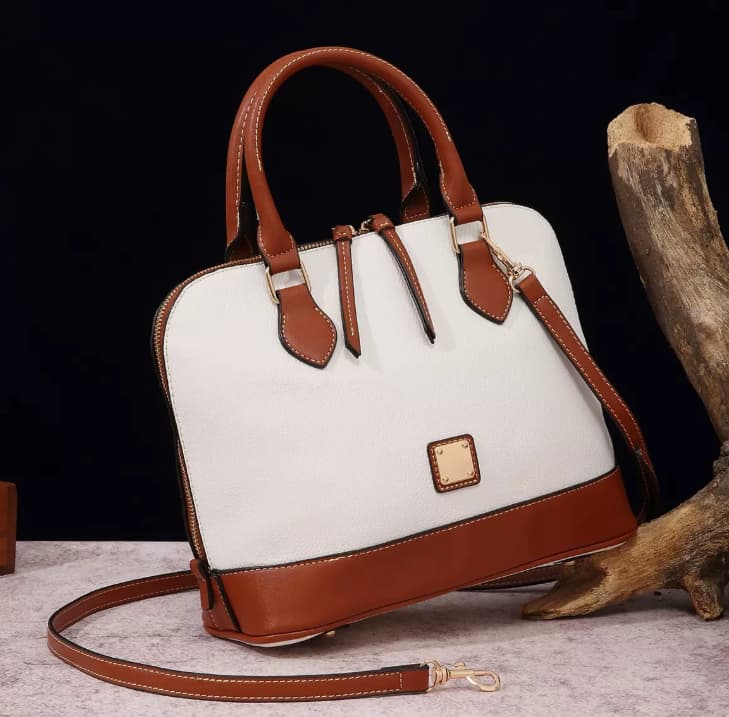
Key Considerations for Selecting Materials for Luggage and Bag Fittings
Before formally comparing different materials, procurement staff and designers need to clarify the key criteria for selecting luggage hardware, moving away from a procurement mindset that focuses solely on price. Instead, they should make comprehensive selections based on product positioning, usage scenarios and shipping standards; this is key to ensuring the quality of leather goods.
Structural hardness and load-bearing capacity
Accessories such as bag fastenings, rivets and corner protectors are subject to prolonged exposure to pulling, friction and compression; the hardness of the material directly determines the product’s maximum load-bearing capacity. Outdoor luggage, pet carriers and large-capacity briefcases place far higher demands on the hardness of metal fittings than ordinary ladies’ handbags.
Aesthetic Texture and Compatibility with Finishing Processes
Different materials are compatible with different surface finishing processes. Techniques such as brushed finishes, antique bronze, black gold, electrophoretic black and spray painting impose strict requirements on the base material, directly affecting the premium texture and visual appeal of the finished luggage.
Environmental compliance standards
The routine testing standards for domestic-market luggage brands differ from the ROHS environmental testing standards for export. Certain materials fail to meet export requirements, making this a key indicator subject to rigorous scrutiny during export procurement.
Corrosion and Wear Resistance, and Colour Fastness
As luggage is a product intended for long-term, repeated use, metal fittings must possess excellent resistance to oxidation and corrosion to prevent issues such as colour fading, rusting or whitening during use.
Customisation and Moulding Compatibility
For non-standard dimensions, custom logos and specially shaped metal fittings, there are significant differences in moulding difficulty, moulding precision and yield rates across different materials, which directly impact the efficiency of customised deliveries.
A Comprehensive Comparison and Analysis of the Four Main Materials Used in Luggage and Bag Fittings
Zinc alloy: the most commonly used material for luggage fittings
Zinc alloy currently ranks as the most widely used base material for hardware fittings in luggage, leather goods, and handbags. We also regard it as the material of choice for branded luggage, mid-range leather goods, and mass-produced customised hardware. Our factory manufactures the vast majority of its buckles, D-rings, square clasps, hanging clasps, metal nameplates, and customised logo hardware using zinc alloy as the base material.
Material
Zinc alloy offers excellent formability and good fluidity in the molten state, making it suitable for the production of hardware components with complex shapes. Whether standard geometric fasteners or customised hardware featuring embossed designs, logo patterns or irregular shapes, all can be produced in a single die-casting process. This results in high moulding precision, smooth edges and corners, and no noticeable burrs, minimising the need for extensive secondary processing and ensuring a stable yield rate in mass production.
Hardness And Performance
The standard zinc alloy material used in luggage and bags meets the required hardness standards. It is capable of withstanding the daily loads and stress associated with conventional ladies’ handbags, rucksacks, briefcases and leather goods, and is resistant to deformation and breakage. Following standard electroplating, spray coating and brushed finish processes, the surface exhibits strong adhesion and stable colour fastness, making it resistant to colour fading and white oxidation under normal usage conditions.
process compatibility
Zinc alloy is highly versatile and is perfectly suited to a full range of surface treatment processes, including nickel plating, antique bronze, black gold, electrophoretic black, brushed finishes and spray coating. It can replicate the various textures required for high-end leather goods—such as vintage, matt, glossy and satin finishes—to meet the design requirements of luggage products in different styles. Furthermore, the zinc alloy produced by our factory is suitable for eco-friendly electroplating treatments, fully complying with the ROHS environmental standards for international trade, and we are able to undertake all types of bulk export orders.
Suitable applications
mid-range branded luggage, fashion handbags, business briefcases, everyday rucksacks, standard outdoor luggage, branded customised logo hardware, and various customised irregular-shaped fasteners. It represents a cost-effective choice for bulk procurement and standard mould-making customisation.
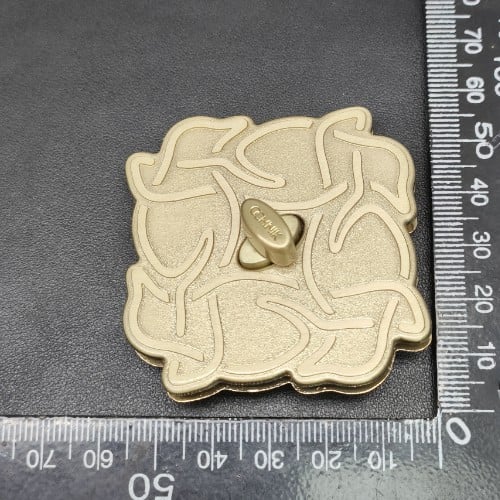 | 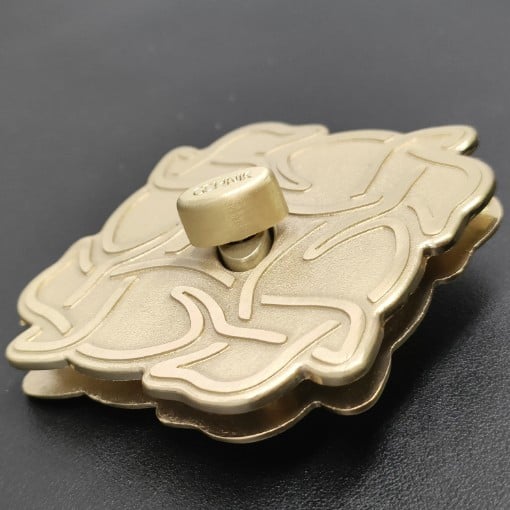 |
Iron: A high-load-bearing, cost-effective base material for hardware
Iron serves as a traditional base material in luggage hardware. We rely on it extensively for heavy-duty luggage fittings, thanks to its high hardness, robust toughness, and superior load-bearing strength. We frequently use it in stress-bearing components like webbing buckles, eyelet rivets, luggage bases, and reinforced corner protectors.
Iron Material
The key advantage of iron is its stable mechanical properties; its hardness and tensile strength surpass those of ordinary zinc alloys, whilst offering superior resistance to compression and tension. It is resistant to deformation even under long-term heavy loads, making it suitable for luggage products designed for high-intensity use. Furthermore, the raw material costs for iron are lower, the manufacturing process is well-established, and it offers a clear price advantage in mass production, making it ideal for the procurement of economical leather goods in large quantities.
Process Adaptation
In terms of surface treatment, iron can undergo standard processes such as electroplating, spray painting and blackening; however, the material itself has poor resistance to oxidation. Wrought iron fittings that have not undergone proper surface treatment are prone to rusting when exposed to damp environments over extended periods. Consequently, wrought iron fittings require a higher degree of precision in surface treatment; thicker electroplated layers and sealing treatments are key to enhancing their durability.
We must note that iron has significant limitations in forming capabilities. It cannot produce complex, irregularly shaped structures, and we only use it for standardised hardware fittings with simple structures. We generally do not recommend iron for customised products or those requiring moulds for irregular shapes. Furthermore, some standard iron substrates offer only moderate environmental credentials, so for high-end export orders, we must confirm environmentally friendly processing solutions in advance.
Suitable applications
Heavy-duty outdoor bags, tool bags, pet carriers, large-capacity travel bags, budget-friendly leather goods, standardised rivets, webbing buckles, reinforced corner protectors and other hardware fittings characterised by simple structures and high load-bearing capacity.
Brass: A premium, affordable base material specifically designed for high-end leather goods
Brass stands out as a premium base material in the luggage and bag hardware industry, offering a texture far superior to zinc alloy and wrought iron. We target it mainly at the ‘affordable luxury’, high-end, and vintage leather goods segments, and we apply it regularly to hardware fittings on high-end genuine leather handbags, luxury leather accessories, and custom-made luggage.
Brass Material
The core advantage of brass lies in its natural texture: it possesses a warm, even colour and a fine metallic grain, capable of producing a sophisticated metallic lustre without the need for complex processing. Following antique-brass brushing, polishing and anti-oxidation treatment, its vintage and ‘light luxury’ aesthetics are particularly striking, making it the key hardware choice for enhancing the calibre of high-end leather goods. Furthermore, brass offers excellent resistance to oxidation and corrosion, as well as exceptional weather resistance. It is unlikely to rust or fade even with long-term use, and its service life far exceeds that of other materials.
In terms of performance, brass offers moderate hardness and high toughness; it is resistant to breakage and deformation, and allows for high machining precision, making it suitable for the production of fine, small hardware fittings, high-end logo plaques, exquisite clasps, decorative fasteners and similar products. However, brass is a relatively expensive material; the cost of raw materials is high, and mass production costs are significantly higher than those for zinc alloys and iron. Furthermore, it offers poor value for money when used to produce large hardware fittings.
Brass aligns well with high-end techniques such as wire-brushing, polishing, vintage ageing, and precision electroplating. These processes yield finished products with a premium appearance that lacks the cheap metallic feel often associated with lower-grade metals. Furthermore, brass possesses excellent environmental credentials; it meets various domestic and international environmental testing standards without the need for special treatment, making it suitable for high-end export brand orders.
Suitable applications
high-end genuine leather handbags, ‘affordable luxury’ brand luggage, bespoke high-end leather goods, luxury replica bags, high-end decorative hardware fittings, high-precision logo plaques and other premium product accessories.
Environmentally Friendly Alloy: A New Type of Base Material Specifically Designed for Foreign Trade Compliance
Eco-friendly alloy is a new type of base material specifically designed for luggage hardware, tailored to meet the compliance requirements of high-end brands and the export market. Developed by our factory as a specialised upgrade for international procurement and brand-compliant orders, it effectively addresses industry pain points such as standard ordinary alloys failing to meet environmental standards and exceeding heavy metal limits.
The eco-friendly alloy base material combines the forming advantages of zinc alloy with the environmental attributes of high-end materials. It produces a refined finish and enables us to manufacture complex, irregularly shaped hardware components, custom-logo hardware, and precision fasteners. Its forming precision and surface smoothness rival those of high-end materials. Furthermore, the material itself has an extremely low heavy metal content. Combined with our factory’s hypoallergenic, eco-friendly electroplating process, it can easily pass authoritative international environmental tests such as RoHS, making it the preferred choice for compliant luggage hardware in the export market.
In terms of performance, eco-friendly alloys offer balanced hardness and excellent stability. Following specialised processing, they exhibit outstanding resistance to wear, oxidation and colour fading, making them ideal for the long-term use required by high-end luggage and bags. Compared to standard zinc alloys, eco-friendly alloys offer superior corrosion resistance and processing stability, ensuring greater consistency in quality across bulk shipments, with very few instances of colour variation between batches, colour fading or defects.
In terms of cost, eco-friendly alloy is priced higher than standard zinc alloy but lower than brass, offering outstanding value for money. It is ideal for brand companies and international trade buyers who have strict environmental compliance requirements whilst also needing to control production costs.
Suitable applications
luggage for international export, leather goods for cross-border e-commerce, compliant luggage for high-end brands, baby and maternity leather goods, pet bags, hypoallergenic leather goods hardware components, and all types of bulk orders requiring environmental testing reports.
A Guide to Avoiding Pitfalls When Selecting and Procuring Materials for Luggage and Bag Fittings
Drawing on many years of experience in manufacturing at source factories and B2B supply, we have summarised key points to help buyers and designers avoid common pitfalls when selecting materials, thereby assisting procurement teams in minimising quality risks and communication costs.
Avoid selecting products based solely on price
Many buyers prioritise low-cost hardware; however, low-priced products made from standard zinc alloy or wrought iron often use recycled base materials, which contain high levels of impurities. These are prone to deformation, colour fading and rust, and fail to meet environmental standards, making it highly likely that the entire batch will require reworking or be scrapped. We recommend selecting materials appropriate to the product’s positioning: for mid-range products, opt for brand-new zinc alloy; for export products, choose environmentally friendly alloys; and for high-end leather goods, select brass.
Distinguishing between standard processes and export-compliant processes
Standard electroplating processes do not meet export standards. For cross-border or export orders, we must confirm in advance whether the manufacturer holds ROHS environmental compliance certification and can provide compliant test reports. This helps us avoid order rejections due to non-compliant processes
Priority given to zinc alloys/environmentally friendly alloys for customised irregular shapes
Iron has significant limitations in terms of forming capabilities and cannot be used to produce complex irregular shapes, intricate logos or embossed structures. For high-end customisation and non-standard moulding orders, zinc alloys or environmentally friendly alloys are the preferred choice, as they offer better forming results and a higher yield rate.
Exercise caution when using lightweight alloys in high-load applications
For outdoor luggage, pet carriers, and large-capacity bags, we advise using reinforced zinc alloy or wrought iron for all load-bearing fastenings, rivets, and corner protectors. This choice guarantees sufficient hardness and load-bearing strength, and it stops the hardware from breaking or coming loose in use.
Premium brass is the material of choice for products with a distinctive texture
For leather goods that stress high-end, affordable luxury, and vintage aesthetics, we advise against using ordinary alloys. Only brass offers an irreplaceable natural texture, and it actively elevates both the product’s premium appeal and the brand’s standing.
Guidance on Material Customisation and Process Adaptation at the Source Factory
As a specialist manufacturer of hardware for luggage and leather goods, our factory specialises in B2B bulk wholesale, customisation based on client designs, and bespoke moulding services. We offer a full range of hardware accessories for four main materials, suitable for all categories of luggage and leather goods, including high-end leather goods, rucksacks, ladies’ handbags, briefcases, outdoor luggage and pet carriers.
Our product range covers a full series of luggage hardware accessories, including luggage clasps, dog clips, webbing buckles, eyelet rivets, corner protectors, hanging loops, D-rings, square buckles, semi-circular buckles, magnetic clasps, luggage bases, metal nameplates and customised logo hardware. All products are manufactured using brand-new base materials; we strictly avoid the use of recycled materials. The materials feature uniform hardness and stable performance, ensuring that bulk shipments are free from quality issues such as colour variation between batches, colour fading or deformation.
Standard surface finishes include nickel plating, antique bronze, black gold, electrophoretic black, brushed finish, spray coating and hypoallergenic eco-friendly plating. Our entire product range complies with ROHS environmental standards for international trade, meeting the compliance requirements for domestic and international brand procurement and bulk export orders. We also offer customisation for non-standard dimensions, moulding for exclusive logos and personalised process adjustments. With direct supply from the factory throughout the process, we eliminate intermediary mark-ups whilst ensuring controllable quality and lead times.

oyc
High Quality metal fitting, Dog Hook, Metal Ring,customer made Logo Plate