An Introduction to Environmentally Friendly Electroplating Processes for Luggage Hardware: A Detailed Explanation of ROHS Compliance Standards for International Trade and the Differences in Processes
When buyers procure luggage, leather goods and handbags for the export market through B2B channels, they regard the environmental compliance of metal fittings as a critical factor. This compliance determines if orders will pass customs smoothly, if brands will secure entry into overseas retail outlets, and if products will sustain long-term exports. Unlike conventional domestic procurement, which emphasises appearance and value for money, overseas buyers, foreign trade processing factories and cross-border luggage brands have strict standardised requirements regarding the environmental rating, plating processes and levels of hazardous substances in hardware components such as luggage clasps, dog clasps, D-rings, square clasps, magnetic clasps and labels.
At present, the standard electroplating processes used by many domestic luggage hardware manufacturers fail to meet the market access standards of overseas markets such as the EU, South-East Asia and North America. Numerous buyers have faced issues such as the return of entire container loads, customs seizures and fines imposed on brands due to hardware components failing to meet environmental standards, resulting in significant financial losses. This article will provide a comprehensive overview of the core knowledge regarding environmentally friendly electroplating for luggage hardware, covering aspects such as mainstream electroplating processes, the key differences between environmentally friendly and non-environmentally friendly processes, ROHS compliance requirements for international trade, techniques for selecting the appropriate processes for different components, and key points to avoid pitfalls during procurement. It aims to serve as a professional guide for product selection and procurement for purchasing departments at luggage manufacturers, leather goods designers and international trade buyers.
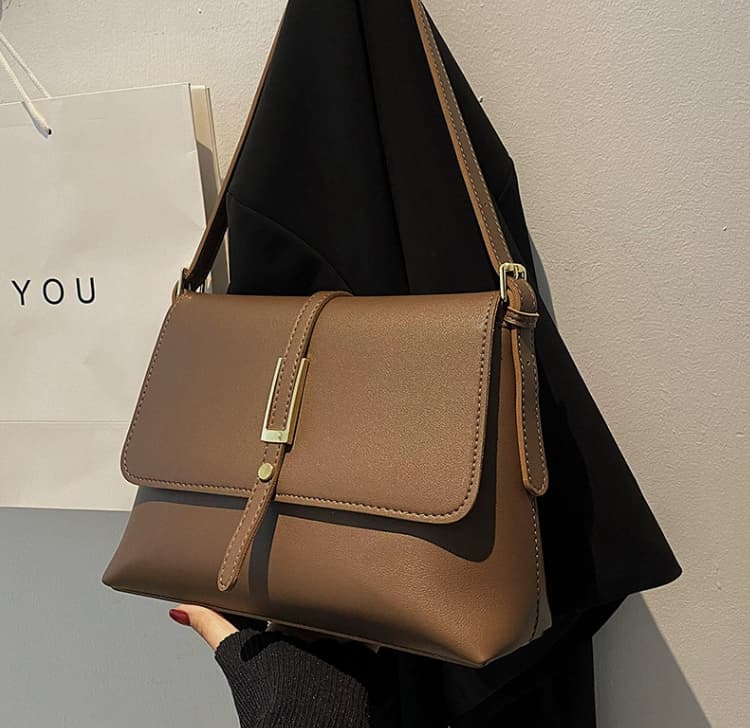
Classification of Mainstream Surface Finishing Techniques for Luggage Hardware (An Introduction to Standard Factory Processes)
The surface treatment processes for luggage and leather goods hardware directly determine the product’s appearance, texture, corrosion resistance, service life and environmental compliance rating. As a manufacturer specialising in bespoke luggage hardware, our standard mass production processes include electroplating, electrophoresis, brushed finishes and spray coating. The product categories, usage scenarios and international trade standards for which different processes are suitable vary considerably, and these factors form the core basis for selection by international buyers.
Conventional Electroplating Processes
Electroplating is the most fundamental and widely used surface treatment process for luggage hardware. It is suitable for all mainstream materials, including zinc alloys, iron, brass and eco-friendly alloys, and covers the full range of accessories such as D-rings, square buckles, webbing buckles, eyelet rivets, hanging loops and corner protectors. Conventional electroplating includes basic finishes such as nickel, antique bronze and black gold. The process works by using electrolysis to form a metallic coating on the surface of the hardware, thereby enhancing the product’s resistance to rust and oxidation whilst improving its appearance.
The advantages of this process include a uniform finish, high adaptability and excellent stability in mass production, enabling it to meet the standard requirements for domestic mid- to low-end luggage, leather goods, outdoor bags and pet bags. However, traditional electroplating processes suffer from excessive heavy metal residue, making them unsuitable for export orders; they are only suitable for bulk procurement for the domestic market.
Environmentally Friendly, Hypoallergenic Electroplating Process
Environmentally friendly, hypoallergenic electroplating is an upgraded version of traditional electroplating and is currently the mainstream, essential process for hardware used in luggage for the export market. This process eliminates the harmful additives found in traditional electroplating and strictly controls the levels of hazardous substances such as lead, mercury, cadmium and hexavalent chromium. The resulting plating is fine-grained and residue-free; not only does it comply with safety standards for human contact, preventing skin allergies during the wearing and use of leather goods, but it also meets basic environmental access requirements for overseas markets.
This process is widely used for luggage and bag hardware components intended for personal use—such as high-end ladies’ handbags, affordable luxury leather goods, branded rucksacks and briefcases—which must comply with international trade regulations. It encompasses core components including magnetic fasteners, bag locks, branded metal tags and customised logo hardware, and is the preferred process for the export of branded luggage and bags.
Electrophoretic black finish, spray painting process
Electrophoresis and spray painting are surface coating processes, distinct from the metallic finish achieved through electroplating. The black electrophoresis process utilises an electric field to ensure that organic paint adheres evenly to the surface of metal fittings. The resulting coating offers strong adhesion and is resistant to peeling, with an overall matt finish that is wear- and scratch-resistant, making it suitable for products requiring high durability, such as outdoor luggage, work bags and sports bags.
The spray-painting process can achieve a wide range of colours and both matt and gloss finishes, and it offers high colour saturation and great design flexibility. Manufacturers frequently use it to decorate metal fittings on bespoke luggage and leather goods from niche brands. We can upgrade both processes to meet environmental standards and comply with ROHS testing requirements for export, and this makes them common techniques for creating distinctive luggage products for the export market
Brushed Finish Process
The brushed finish process involves mechanically polishing the surface of metal fittings to create a uniform textured pattern, whilst retaining the metal’s natural texture. It offers a minimalist, sophisticated appearance without any coating to obscure the surface, and is commonly used for accessories such as D-rings, square buckles and metal nameplates on high-end briefcases, business leather goods and affordable luxury luggage. The eco-friendly brushed finish process relies solely on physical polishing, avoiding pollution from chemical plating. It is environmentally sustainable and meets virtually all overseas market access standards.
The Key Differences Between Conventional Electroplating and Eco-Friendly Electroplating (A Must-Read for International Trade Purchasers)
Many novice international trade purchasers tend to confuse conventional electroplating with eco-friendly electroplating; it is impossible to distinguish between products from these two processes based on appearance alone, which is a major cause of compliance issues in international trade orders. By examining four key aspects—appearance, performance, environmental standards and applicable scenarios—one can clearly identify the core differences between the two processes, thereby providing a basis for selecting the appropriate option for bulk procurement.
Differences in Environmental-Friendly Ingredients and Testing Standards
Conventional electroplating processes utilise chemical reagents containing high concentrations of heavy metals. As a result, finished metal fittings contain high levels of harmful substances such as lead, cadmium, mercury and hexavalent chromium, and are unable to pass any environmental testing required for international trade; they are therefore only suitable for general domestic sales.
Our factory’s eco-friendly electroplating process strictly adheres to international trade production standards. We use eco-friendly raw materials and additives throughout the entire process and strictly control the levels of harmful substances during production. The finished products successfully pass RoHS environmental testing, with residual levels of harmful substances fully compliant with the market access standards of overseas markets such as the EU, the US and Southeast Asia, enabling us to fulfil various bulk export orders. Furthermore, our eco-friendly electroplating process is hypoallergenic and prevents the leaching of heavy metals, thereby meeting the safety standards for maternity and baby luggage and affordable luxury leather goods in overseas markets.
Differences in Appearance and Performance
In terms of appearance, there is very little difference between standard electroplating and eco-friendly electroplating; both can achieve standard colour finishes such as nickel, antique bronze and black gold, with no noticeable colour variation. However, in terms of performance, eco-friendly plating offers a higher coating density and better adhesion. It demonstrates greater stability during daily use, friction and in humid environments, and is less prone to issues such as flaking, colour fading or oxidation and blackening, thereby meeting the quality requirements for the long-term use of luggage.
Conventional electroplated products have a porous coating with poor moisture and rust resistance. In the damp conditions of sea transport or in hot and rainy overseas climates, they are highly prone to oxidation, rusting and coating peeling. This not only affects the product’s appearance but can also result in an entire batch failing to meet quality standards, leading to after-sales disputes.
Differences in Applicable Scenarios and Order Attributes
Products manufactured using standard electroplating processes are suitable only for domestic, low-end luggage, disposable luggage, and bulk purchases by processing plants with no export requirements. Whilst they offer significant price advantages, they do not meet any foreign trade compliance requirements.
Products manufactured using eco-friendly electroplating processes are the standard choice for all international trade luggage orders, bulk purchases by brands, bespoke high-end leather goods, and cross-border e-commerce luggage products. whether we are producing standard hardware components or customised items such as logo hardware, irregularly shaped fasteners and customised corner protectors made to customer drawings, we can process all of them using eco-friendly electroplating, and this ensures comprehensive compliance for every order.
A Detailed Explanation of the Core ROHS Environmental Compliance Standards for Luggage and Bag Hardware in International Trade
The ROHS environmental standard is currently the most fundamental and widely applied industry standard for the export of luggage and bag hardware, covering virtually the entire EU market and also adopted by numerous overseas markets, including Southeast Asia, the Middle East and Australia. Many buyers are merely aware that products ‘must pass ROHS testing’, but are unclear about the specific compliance requirements, leading to discrepancies in product selection and manufacturing process coordination.
Key Substances Regulated by the RoHS Standard
RoHS testing for luggage hardware components primarily regulates six hazardous substances, namely lead, mercury, cadmium, hexavalent chromium, polybrominated biphenyls and polybrominated diphenyl ethers. All luggage hardware products manufactured by our factory using environmentally friendly electroplating processes—including D-rings, dog clips, latches, magnetic fasteners, rivets, metal nameplates and custom-moulded fittings—are subject to strict control over the content of the above substances. All indicators fall below the internationally stipulated thresholds, ensuring they can successfully pass certification by authoritative third-party testing bodies.
It is important to note that the thresholds for the control of hazardous substances vary slightly depending on the material of the hardware fittings—such as brass, zinc alloy and iron. Source manufacturers must adjust production process parameters according to the material; this is the core reason for the low pass rate in environmental testing among small-scale processing plants. Our factory has established dedicated environmentally friendly production processes for different materials to ensure consistent compliance across all types of fittings.
Key Points for ROHS-Compliant Procurement in International Trade Orders
Firstly, when procuring for international trade, it is essential to confirm the manufacturing processes with the factory in advance and explicitly require the use of ROHS-compliant electroplating processes for international trade. This prevents the factory from defaulting to standard electroplating processes, which could result in products failing to meet compliance standards. Secondly, prior to bulk procurement, you may request the manufacturer to provide finished product test reports to verify the levels of hazardous substances and retain compliance documentation, thereby avoiding situations where there is no supporting evidence during customs inspections or brand audits.
Furthermore, for customised hardware components (such as hardware with custom logos or custom-moulded irregular-shaped parts), we must agree on environmental process requirements in advance, and we must use environmentally friendly raw materials throughout the moulding and production process. This prevents situations where we cannot carry out environmental process upgrades after moulding, which would otherwise cause material wastage and delays to the production schedule
A Guide to Selecting Eco-Friendly Manufacturing Processes for Different Luggage and Bag Hardware Components
There is a wide variety of luggage and bag hardware components. As the installation location, frequency of friction, aesthetic requirements and usage scenarios vary for different components, the most suitable eco-friendly manufacturing processes also differ. Drawing on many years of experience in customised and bulk supply for the export market, we have compiled a dedicated guide to selecting manufacturing processes for core component categories, tailored to suit all types of export-oriented luggage and leather goods.
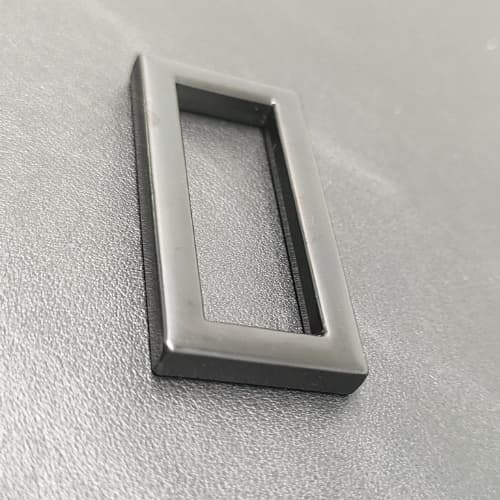
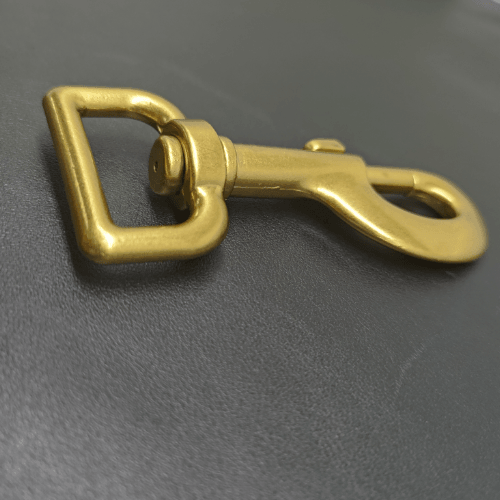
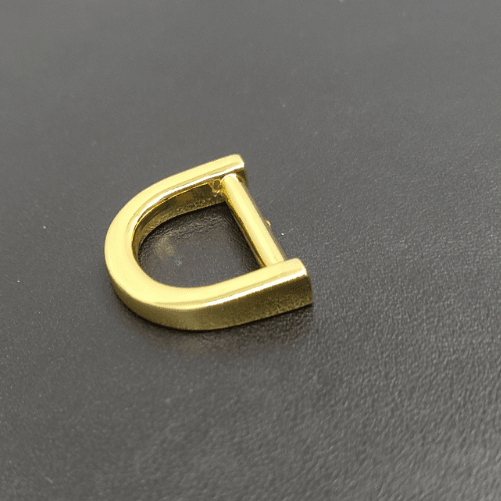
Movable fasteners: D-rings, square buckles, semi-circular buckles, dog clips
These components are core movable fittings for luggage and bags. Subject to frequent friction and stress, they demand exceptionally high standards in terms of plating adhesion, wear resistance and environmental friendliness, and are key components in export quality inspections. For standard export orders, eco-friendly nickel plating and eco-friendly antique bronze finishes are the preferred choices. These finishes offer a versatile aesthetic, are wear-resistant and corrosion-resistant, and are suitable for all categories of luggage and bags, including ladies’ handbags, rucksacks, outdoor bags and pet carriers. For high-end, affordable luxury leather goods, an eco-friendly brushed finish may be selected to enhance the product’s texture and perceived quality.
 |  |  |
Decorative hardware for locks: magnetic fasteners, luggage fasteners, hardware nameplates
Fasteners and nameplates are exterior accessories for luggage and bags, requiring high standards of aesthetic quality and craftsmanship. As they come into direct contact with the skin, they must meet hypoallergenic, eco-friendly and non-toxic standards. For international brand orders, eco-friendly black gold and eco-friendly nickel plating processes are the mainstream choices. These coatings exhibit a uniform and refined finish, contain no defects and carry no risk of colour fading. We can also combine them with customised logo engraving to suit the export of high-end branded luggage and business leather goods.
Fasteners for structural protection: eyelets, corner protectors, base plates for luggage
Rivets, corner protectors and bases are predominantly concealed or functional fittings, prioritising wear resistance, rust prevention and corrosion resistance. They are suitable for products such as outdoor luggage, industrial cases and large-capacity briefcases. For export orders, environmentally friendly electrophoretic black coating or standard eco-friendly electroplating processes are available. These offer excellent value for money and consistent performance, making them suitable for high-volume export orders whilst meeting the demands of humid environments during sea transport.
A Guide to Avoiding Common Pitfalls in the Procurement of Hardware for Export Luggage and Bags
Based on common issues in the B2B international trade procurement sector, many procurement disputes and order failures stem from misunderstandings regarding manufacturing processes, non-standard factory practices, and unsecured verbal commitments. With regard to the procurement of eco-friendly electroplating processes, we have compiled five key points to help buyers avoid common pitfalls and minimise partnership risks.
Reject ‘verbal claims of environmental friendliness’; look for technical standards
Some small-scale processing plants on the market may confuse the concept of environmentally friendly processes, passing off standard electroplating as eco-friendly electroplating. They may verbally promise that products will pass inspections, yet the finished goods fail to meet the required standards. When procuring hardware for export orders, it is essential to clearly confirm the process standards during collaboration with suppliers, requiring the factory to adopt ROHS-compliant production processes throughout the entire process. Where necessary, set aside samples for testing to avoid compliance issues arising after bulk shipments have been dispatched.
Distinguishing Between ‘Sample Compliance’ and ‘Batch Compliance’
Some factories submit only a small number of samples for testing, which meet the standards; however, during mass production, in order to control costs, they switch raw materials or simplify processes, resulting in batch products that fail to meet environmental standards. As the source manufacturer, our factory maintains uniform environmental production standards throughout the entire process; the processes and raw materials used for samples are identical to those for mass production, ensuring that batch products consistently pass environmental testing and guaranteeing consistent quality for export orders.
For maritime transport applications, high-stability, environmentally friendly processes are the preferred choice
Because most international trade orders travel by sea, the high temperatures, high humidity and high salt fog levels inside ship holds place extremely high demands on the stability of metal plating. Although standard eco-friendly plating processes may pass inspections, they lack sufficient moisture and rust resistance, so they oxidise easily during sea transport. For international orders destined for overseas markets, we recommend prioritising the use of thickened eco-friendly electroplating processes to enhance the plating’s corrosion resistance and ensure its suitability for long-distance sea transport.
Finalising Process Solutions for Customised Hardware in Advance
Customised hardware involving mould-making and logo etching is difficult to modify and involves high costs. When procuring customised hardware for export, it is essential to confirm environmental compliance requirements prior to mould-making and finalise process solutions—such as electroplating, wire brushing and spray coating—to avoid delays and financial losses caused by non-compliance with export standards after production.
Adapting to the Process Requirements of Different Overseas Markets
Environmental standards vary slightly across different overseas markets. The EU market strictly enforces the full set of RoHS standards, whilst the North American market focuses on the control of heavy metal residues, and the South-East Asian market emphasises basic environmental and anti-allergy standards. When procuring, you can work with manufacturers to adjust process parameters specifically for your target export market, ensuring precise compliance with local market access regulations.
Our Factory’s Strengths in the Production and Delivery of Environmentally Friendly Hardware for the Export Market
As a B2B manufacturer specialising in hardware components for luggage and leather goods, our factory has extensive experience in supplying hardware for the export market. In response to environmental compliance requirements for overseas orders, we have established a standardised production system utilising environmentally friendly processes, which comprehensively caters to the needs of brand bulk procurement, complete export order fulfilment and high-end bespoke orders.
For raw materials, we source all our zinc alloys, iron, brass and eco-friendly alloys from compliant, environmentally friendly suppliers, so we eliminate the risk of excessive heavy metal levels at the source. For processes, we implement a full suite of standardised export-grade techniques, including eco-friendly electroplating, eco-friendly wire drawing and eco-friendly electrophoresis .All products pass ROHS environmental testing and support customisation with hypoallergenic finishes; at the production level, we offer bulk wholesale of standard components, customisation based on provided drawings and bespoke moulding, catering to a full range of product categories including high-end leather goods, outdoor luggage, pet bags and cross-border brand luggage.
Furthermore, all products manufactured using our eco-friendly processes feature plating that meets hardness standards and exhibits strong adhesion. Under normal usage conditions, they are unlikely to suffer from peeling, colour fading or oxidation, making them suitable for long-term use overseas. We are able to provide a stable, high-quality supply chain service for hardware components to international buyers and brand manufacturers.

oyc
High Quality metal fitting, Dog Hook, Metal Ring,customer made Logo Plate