A Comprehensive Guide to Selecting Luggage Hardware: A Detailed Explanation of Materials, Manufacturing Processes, Compatibility and How to Avoid Pitfalls
In the luggage, leather goods and handbag manufacturing industry, metal fittings form the core structural framework of the products and are key to their aesthetic appeal. Small metal components such as D-rings, square buckles, dog clips, latches, magnetic fasteners, rivets and corner protectors directly determine the durability, perceived quality and overall finish of luggage products. For procurement teams at luggage manufacturers, leather goods designers, branded luggage companies and international trade buyers, the selection of hardware components, material screening, quality control of manufacturing processes and coordination of customisation are crucial steps in ensuring product quality, controlling production costs and avoiding after-sales issues.
The domestic luggage hardware market offers vast product variety, but manufacturers differ significantly in materials, finishes, production standards and environmental compliance. Buyers often face specification mismatches, fading, substandard hardness, failed environmental tests and customisation delays. Drawing on B2B production experience, this article covers six core sourcing areas—material selection, process differences, product compatibility, procurement pitfalls, customisation and trade standards—offering practical guidance for luggage makers, export plants and brand teams
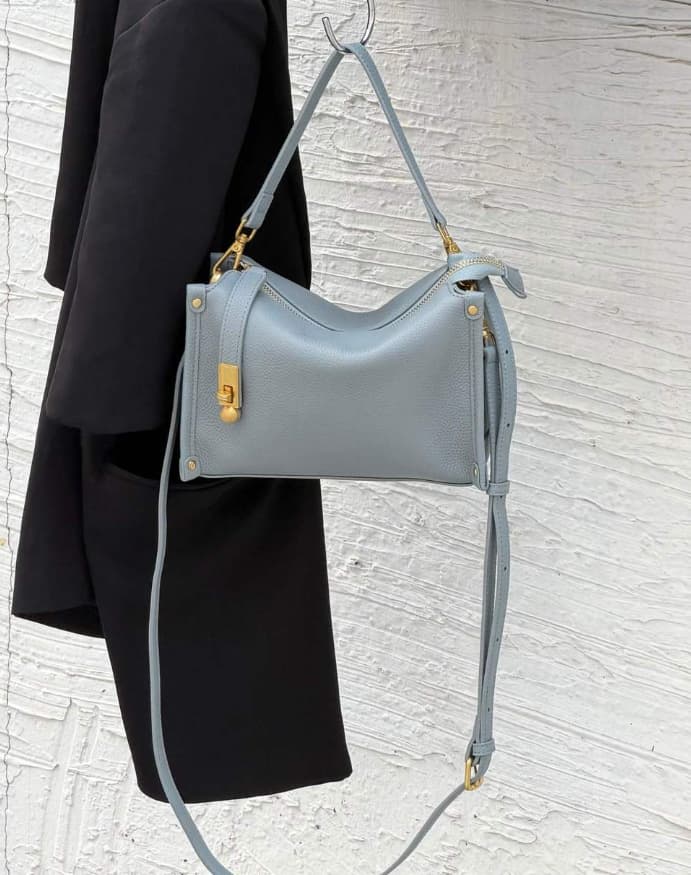
A Comparison of Materials Used in Mainstream Luggage Fittings: Meeting the Needs of Different Luggage Categories
Base material choice drives the key quality differences among hardware fittings for luggage and leather goods. Different materials offer varying hardness, toughness, environmental friendliness, texture, and production costs, and each clearly suits different product applications. Our factory routinely manufactures components from four main material categories: zinc alloy, iron, brass, and eco-friendly alloys. These four are currently the industry’s mainstream materials for mid- to high-end luggage, exported leather goods, and branded luggage, so we can precisely match procurement choices to each product’s positioning.
Zinc Alloy: A Versatile, Mainstream Base Material
Manufacturers currently use zinc alloy more widely than any other material for luggage and bag hardware fittings, applying it to the vast majority of women’s handbags, rucksacks, briefcases and casual leather goods. It encompasses a full range of products, including D-rings, square buckles, semi-circular buckles, hanging clasps, webbing buckles, luggage locks and metal nameplates. This material is highly malleable, allowing for the production of complex shapes and supporting customised precision moulding. The finished products feature a smooth, refined surface and are compatible with a variety of electroplating and spray-painting processes, resulting in an excellent texture and high-quality finish. Furthermore, zinc alloy possesses moderate hardness and is resistant to deformation; its load-bearing capacity meets the requirements for consumer luggage and everyday leather goods. Offering exceptional value for money, it is the material of choice for bulk procurement by brands and standard luggage production.
Iron: A practical base material with high load-bearing capacity
Iron hardware fittings offer greater hardness, superior toughness and excellent load-bearing performance. They are primarily suited to products with high demands on the load-bearing capacity and sturdiness of their hardware, such as outdoor luggage, work bags, pet carriers and large-capacity travel bags. Common types include reinforceddog clips, heavy-duty webbing buckles, reinforced eyelet rivets and reinforced corner protectors. Iron fittings offer excellent structural stability, are resistant to breakage and possess outstanding wear resistance, making them suitable for luggage applications involving frequent use and high-intensity pulling. Furthermore, manufacturers can enhance the appearance of iron fittings through various electroplating processes, balancing practicality with aesthetics; they consider them the material of choice for functional luggage hardware.
Brass: A premium base material for the ‘light luxury’ segment
Brass is a base material specifically used for high-end luggage and bag hardware. It possesses a warm, sophisticated texture and a uniform metallic lustre, with oxidation and corrosion resistance far surpassing that of ordinary alloys and iron. It is resistant to rust and discolouration even with long-term use, making it particularly suitable for high-end products such as luxury leather goods, ‘light luxury’ ladies’ handbags, premium business briefcases and bespoke branded luggage. Brass hardware can be finished using high-end techniques such as fine brushed finishes, antique bronze plating and matt spray coating. The finished products feature a three-dimensional texture and high visual distinction, making them core components for elevating the calibre of luggage and handbag products. They are frequently used in the hardware fittings for limited-edition and high-end bespoke leather goods.
Eco-friendly Alloy Material: Base Material Specifically Designed for Export Orders
Manufacturers have developed this eco-friendly alloy specifically as a specialised base material for the export market. It strictly complies with ROHS environmental testing standards, contains no leaching of harmful heavy metals, and meets all environmental parameters, enabling it to pass export inspections in regions such as Europe, the US and South-East Asia without issue. This material combines the malleability of zinc alloy with eco-friendly properties. It supports the customised production of various fasteners, buckles, nameplates and rivets, and is suitable for bulk procurement for export luggage, leather goods and cross-border e-commerce luggage products. As the material of choice for export procurement orders, it effectively mitigates the risk of failing export environmental compliance tests.
A Detailed Guide to Surface Finishes for Luggage Fittings: Differences and Suitable Applications
The material determines the basic quality of hardware fittings, whilst the surface finish determines the product’s appearance, texture, wear resistance, oxidation resistance and service life; it is also a key criterion for distinguishing between high-, medium- and low-end luggage fittings. Our factory’s standard, well-established processes include nickel plating, antique bronze, black gold, electrophoretic black, brushed finish, spray coating, and hypoallergenic eco-friendly plating. Each process has distinct applications, textural characteristics and advantages; therefore, when selecting products, it is essential to consider the product’s positioning.
Standard Electroplating Processes: General-Purpose Options
Nickel, antique bronze and black gold electroplating are the industry’s standard, general-purpose processes, suitable for mass-produced items such as affordable luggage, standard leather goods and casual handbags. Nickel-plated finishes feature a bright, translucent lustre and a clean, crisp metallic texture, making them versatile for pairing with all manner of light-coloured and plain-coloured luggage; The antique bronze finish has an inherent vintage feel, making it ideal for retro-style leather goods, workwear-style bags and outdoor luggage, offering a highly distinctive aesthetic; the black gold finish exudes understated luxury, with a matt black base complemented by metallic sheen, making it suitable for business briefcases, men’s leather goods and high-end casual bags. We have thoroughly established these three standard electroplating processes, and they yield highly consistent results; under normal use, the finishes rarely peel or flake, which makes them highly suitable for large-scale bulk procurement
Electrophoretic Black and Spray-Coating Processes: Durable and Practical Options
The electrophoretic black coating is uniform and offers strong adhesion. Compared to standard electroplating, it provides superior wear resistance, scratch resistance and corrosion resistance. The surface has a fine, matt finish without any glaring metallic reflections, making it ideal for practical products such as business luggage, durable outdoor bags and pet carriers. The spray-painting process allows for bespoke colours to be tailored to the bag’s colour scheme. It offers high colour saturation and excellent colour matching, enabling a seamless harmony between the hardware and the body of the bag, thereby resolving the issue of hardware colours appearing out of place. It is frequently used for bespoke leather goods and niche-design luggage hardware.
Brushed Finish and Eco-Friendly Electroplating Processes: High-End Export Models
The brushed finish process creates a uniform texture through physical polishing, resulting in a sophisticated, three-dimensional feel. It offers excellent resistance to fingerprints and scratches, maintaining the hardware’s pristine appearance over the long term, and is suitable for mid- to high-end branded luggage and affordable luxury leather goods. The hypoallergenic, eco-friendly electroplating process is exclusively designed for the export market. It optimises the standard electroplating formula to be more environmentally friendly, leaving no harmful residues. Not only does it comply with ROHS environmental standards, but it also prevents allergic reactions caused by the hardware coming into contact with the skin. It is suitable for high-end, safety-critical products such as cosmetics cases, intimate leather goods and children’s luggage intended for export.
Guide to Selecting Core Luggage Hardware Categories: Precisely Matching Luggage Scenarios
There is a vast array of luggage hardware components, and the functional roles and suitable applications of different fasteners, locks and reinforcement fittings vary significantly. Many procurement errors and instances of incompatible fittings stem from selecting the wrong product category. Focusing on the core product categories in which manufacturers specialise, and taking into account various luggage production scenarios, we have compiled precise compatibility solutions to assist procurement teams and designers in making swift product selections.
Fasteners Series: D-rings, square buckles, semi-circular buckles, dog clips, webbing buckles
Fasteners are the most used components in luggage, serving to connect, secure, adjust and attach. D-rings, square and half-round buckles offer versatile connections for shoulder, hanging and decorative straps on various bags, with customisable sizes. Dog clips attach bags and accessories, with stable springs and high load-bearing capacity for outdoor use. Webbing buckles adjust strap lengths with robust, anti-loosening structures
Fastenings Series: Luggage Fastenings, Magnetic Clasps
Fastenings determine both the security of a bag’s closure and its ease of use. Standard luggage fastenings feature a compact structure, secure closure and strong anti-theft properties, making them suitable for briefcases, business bags, storage bags and hard-shell luggage; Magnetic fasteners rely on magnetic attraction to close, offering effortless, silent operation and a comfortable feel; they are currently the mainstream choice for light-luxury ladies’ handbags, fashionable casual bags and niche designer luggage. All our fastener hardware undergoes opening and closing wear-resistance testing to ensure smooth, jam-free closure and stable, non-diminishing magnetic strength, making them suitable for the mass production of high-end leather goods.
Reinforcement and decorative items: eyelet rivets, corner protectors, hanging loops, metal nameplates
Manufacturers primarily use eyelet rivets to reinforce and prevent slippage at perforated points on luggage straps, preventing fabric tearing and deformation of perforations, while they also serve a decorative purpose. They widely use them in rucksacks, outdoor luggage and workwear leather goods. Manufacturers mainly use corner protectors to protect the corners of hard-shell luggage, briefcases and storage bags, preventing knocks and wear to the corners and enhancing the durability and three-dimensional appearance of the luggage. They use hanging loops to secure tags and accessories; these are compact, elegant and easy to install. Metal nameplates and customised logo fittings serve as core identifying accessories for branded luggage. They can be custom-made according to brand VI specifications and mould designs, featuring engraved logos, patterns and text to enhance brand recognition and product value.
Accessories: Luggage Bases
Luggage bases are primarily used to provide bottom support for upright luggage, briefcases and make-up cases. They are non-slip and wear-resistant, effectively shielding the base fabric from ground friction and water stains, thereby protecting the base of the luggage and extending its service life. They are suitable for all types of hard-shell upright luggage and high-end storage luggage products.
Key Points to Avoid Common Pitfalls in B2B Luggage Hardware Procurement
During the bulk procurement and custom moulding of luggage hardware, a lack of attention to detail can easily lead to quality defects, delivery delays, failure to pass inspections and compatibility issues, thereby increasing a company’s production costs and after-sales pressure. Drawing on many years of experience liaising with source factories, we have summarised the most common pitfalls encountered by procurement teams to help all types of procurement professionals mitigate risks.
Avoid the pitfall of substandard materials being passed off as genuine
Some small-scale workshops in the market may substitute brand-new base materials with recycled alloys or substandard iron. Such hardware fittings lack sufficient hardness, are prone to deformation or fracture under stress, and contain high levels of impurities, meaning they fail to pass environmental testing. This makes it highly likely that export orders will fail customs inspection. When procuring, it is essential to verify the manufacturer’s base material standards. Prioritise source factories with a fixed material supply chain that can provide environmental testing reports, and eliminate fittings made from recycled or substandard materials to ensure the fundamental quality of the products.
Avoiding Pitfalls: Cutting Corners in Manufacturing Processes
Inadequate surface treatment mostly causes fading, peeling, oxidation and rusting of hardware. To cut costs, some manufacturers reduce the number of electroplating layers or shorten the curing time for spray coating, resulting in cosmetic defects appearing on the finished products after only a short period of use. When sourcing mid- to high-end hardware for export-grade luggage and bags, it is essential to confirm the manufacturing process in advance and clarify the standards for electroplating, spray coating and brushed finishes to ensure that the fittings meet the required standards for wear resistance, oxidation resistance and corrosion resistance.
Avoiding Pitfalls: Dimension Tolerance Non-conformity
The dimensional accuracy of luggage hardware fittings directly affects the fit and compatibility during assembly. Non-standard dimensions or fittings with excessive tolerances can lead to issues such as installation difficulties, excessive gaps and poor fit. Before bulk purchasing, it is essential to confirm the standard product dimensions. For customised fittings, precise drawings must be provided; the source manufacturer can then fine-tune dimensional parameters as required to ensure the fittings fit the luggage pattern perfectly, thereby avoiding bulk rework.
Avoiding the Pitfall of Inefficient Co-ordination in Custom Mould Making
When commissioning customised logo hardware or irregularly shaped fasteners, many procurement teams frequently encounter issues such as manufacturers’ misinterpretation of drawings, chaotic mould-making schedules and cumbersome sample revision processes, leading to production delays. Professional source factories support customisation based on provided drawings, one-to-one drawing verification and sample confirmation procedures, alongside standardised mould-making processes. This effectively reduces communication errors and ensures that customised products meet design requirements.
Avoiding Pitfalls: Non-Compliance with Environmental Standards in International Trade
International trade orders for luggage and bags impose stringent environmental requirements on metal fittings; products that do not comply with ROHS environmental standards cannot clear customs for export. Companies undertaking international trade orders should, when sourcing, prioritise metal fitting manufacturers that support environmentally friendly electroplating and can provide environmental testing reports, whilst maintaining full control over the environmental compliance of materials and processes throughout the entire process to mitigate export risks.
Standardised Process for Custom Moulding of Luggage and Bag Hardware
With the trend towards personalisation and branding in the luggage and handbag industry, standardised, off-the-shelf hardware can no longer meet the demands of high-end brands, bespoke designs and niche-market products. Customisation based on client-provided drawings and bespoke mould-making have become one of the mainstream requirements in B2B procurement. As a source manufacturer, our factory possesses a well-established custom mould-making system characterised by clear processes and high efficiency, catering to a wide range of customisation needs for leather goods, luggage and export-grade hardware. The standardised process is as follows:
Firstly, requirements alignment
The purchaser provides product design drawings, physical samples, logo designs or specific functional and aesthetic requirements, and specifies key parameters such as materials, manufacturing processes, dimensions, quantities and application scenarios.
Secondly, drawing optimisation and confirmation
The factory’s specialist technical team verifies the parameters in the drawings, optimises details in line with production processes to avoid manufacturing challenges, confirms the final production plan with the client, and clarifies manufacturing standards and environmental requirements.
Third, mould making and prototyping
We produce moulds and manufacture prototypes in accordance with the confirmed plan, strictly adhering to the specified materials and surface finishes to faithfully reproduce the design intent
Fourth, sample review
We deliver finished samples to the client for verification to confirm that dimensions, appearance, texture and functionality meet requirements; we make minor adjustments and optimisations based on their feedback
Fifth, mass production
Once we have approved the samples, we commence large-scale mass production and strictly control materials, processes, and dimensional accuracy throughout to ensure consistent quality across the entire batch
Sixth, quality inspection and dispatch
Upon completion, we test the finished products for hardness, inspect them visually, and check environmental parameters; after approval, we package and ship them, and we ensure long-term bulk supply to the brand
Summary of Key Advantages of B2B Procurement Directly from Manufacturers
Compared to intermediaries and traders, dealing directly with manufacturers of luggage and bag hardware is the optimal choice for branded luggage companies, contract manufacturers and international trade buyers seeking to reduce costs, control quality and ensure timely delivery. Our factory has specialised in the research, development, production and customisation of hardware components for luggage and leather goods for many years. We offer a comprehensive range of products, utilising mature manufacturing processes and ensuring consistent quality; our core strengths are tailored to the key requirements of B2B procurement.
The factory strictly controls materials and processes to ensure all components meet hardness standards. Standard products are wear-resistant and durable; eco-friendly items pass environmental tests for export and high-end orders. We offer bespoke manufacturing based on customer drawings, adjusting dimensions, processes and logos across all luggage and bag types. We specialise in B2B wholesale, supporting bulk purchases and long-term partnerships with stable supply and efficient delivery for both small plants and large brands

oyc
High Quality metal fitting, Dog Hook, Metal Ring,customer made Logo Plate