Why Is YKK Zipper So Popular? Is YKK A Designer Brand?
YKK is the global leader in the zipper industry. Since its founding in 1934, it has become synonymous with the high-end zipper market through its exceptional quality, innovative technology, and global presence.
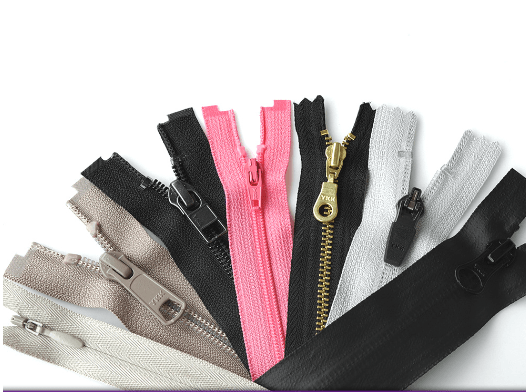
What’s YKK zipper
YKK zippers were founded by Tadao Yoshida in Tokyo in January 1934, making them the pioneer of the zipper industry. Authentic YKK zippers feature the YKK logo on at least one part—either the zipper pull or the zipper head itself. The zipper pull commonly displays the logo in either a wide or narrow font style, with the wide font typically introduced around 2007–2008. Some zippers also bear the YKK logo on their side panels.
YKK zipper vs. Other zipper
YKK zipper is hailed as the “pioneer of the zipper industry,” with its strengths spanning the entire supply chain from raw materials to production and quality control. below ie YKK Zippers vs. Other Zippers Comparison Chart
| Comparison Dimensions | YKK zipper | Other Zippers (Standard/Generic Brands) |
| Brand and Reputation | Industry benchmark and world-leading brand, commanding over 50% of the global market share. It stands as a symbol of quality and reliability | Numerous brands exist, with varying degrees of recognition. Ordinary brands or unbranded products are positioned in the mid-to-low end of the market |
| Price | Expensive. The price is typically several times, or even ten times or more, that of ordinary zippers. | Affordable. With a clear cost advantage, it is the preferred choice for low-priced clothing and supplies. |
| Quality and Craftsmanship | Exceptionally masterful. | Uneven. |
| – Smoothness | The scrolling process is smooth and fluid, with virtually no lag. Rigorously tested. | Prone to lag and stuttering, especially around corners. |
| – Durability | Withstands tens of thousands of repeated pulls while maintaining performance. High strength in webbing, pull tabs, and toothed chains. | Prone to damage, such as chain detachment, zipper pull breakage, or fabric strap tearing. |
| – Consistency | Each zipper maintains consistent color, dimensions, and texture, with strict quality control | Products from different batches may exhibit variations in color, size, and other characteristics. |
| – Attention to detail | The zipper pull features a precision internal structure with smooth, burr-free edges; the stopper and pins are securely fastened. | The finish is rough, the zipper pull may have burrs, and the stopper tends to loosen easily |
| Materials and R&D | Self-developed and self-produced. From smelting copper and aluminum alloys to polyester fibers and dyes, we maintain full control over every step. With robust R&D capabilities, we pioneer specialty zippers featuring waterproof, reflective, and renewable materials. | Purchased materials. Mostly sourced from generic materials in the procurement market, making it difficult to control upstream quality. Low R&D investment, primarily focused on imitation and production of basic models. |
| Product Line | Extremely diverse. From the most basic nylon, resin, and metal zippers to high-end invisible zippers for apparel, as well as waterproof and heavy-duty zippers for workwear and outdoor gear—we offer a complete range. | Relatively limited. Primarily consisting of the most conventional nylon, resin, and metal zippers, with few options for specialty zippers and subpar performance |
| Application Areas | The top choice for premium brands. | Mainstream in the mid-to-low-end market. |
| Comparison Dimensions | Luxury brands (such as Louis Vuitton, Gucci), premium outdoor brands (such as The North Face, Arc’teryx), renowned denim brands (such as Levi’s), and professional workwear brands. | Fast fashion brands, unbranded apparel, inexpensive luggage, low-end custom-made goods, etc |
| Symbolic meaning | It has become synonymous with “superior craftsmanship.” Many brands specifically promote “featuring YKK zippers” as a selling point. | Often overlooked, even low-quality zippers can contribute to a product’s “cheap feel.” |
When was YKK zipper founded?
YKK traces its origins to 1934. Its core “integrated production and sales” model and quality-first philosophy were truly established in the 1950s. It was during the 1960s and 1970s, amid the expansion of global trade and the apparel industry, that YKK was widely “discovered” by manufacturers and consumers worldwide and came to be regarded as a symbol of quality.
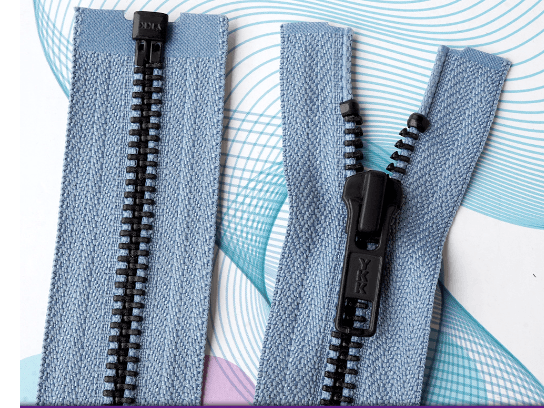
Key Developments in YKK’s History
The most pivotal development in YKK’s history was undoubtedly the “vertical integration” model it established and implemented in the 1950s.this was not only the cornerstone of YKK’s success but also a revolutionary move that fundamentally changed the rules of the zipper industry.
The most crucial development: The “vertical integration” model achieved in the 1950s
Simply put, this meant producing nearly every component of the zipper in-house. Tadao Yoshida was not content with merely assembling zippers; he resolved to control the entire industrial chain from raw materials to finished products.
- Self-produced raw materials: YKK smelts its own aluminum alloys, manufactures its own polyester fibers spun into zipper tapes, and formulates its own dyes.
- Self-built machinery: YKK does not purchase off-the-shelf zipper manufacturing equipment. Instead, it designs, develops, and manufactures all specialized automated production machinery in-house.
- Integrated production: Using its own machinery, YKK processes its self-produced raw materials to ultimately manufacture finished zippers.
Why is this the “most crucial” development?
This model has granted YKK three unrivaled core advantages that remain its competitive moat to this day.
| Advantage | Explanation | result |
| Ultimate Quality Control | Starting with every ore and every thread, we ensure every production step meets the highest standards. This has completely resolved the issue of poor quality in early Japanese zippers. | YKK zippers have become synonymous with reliability, earning the trust of the world’s top brands. |
| Significant cost advantage | Unconstrained by external raw material and machinery supplier pricing, production efficiency is exceptionally high with minimal waste. | Even though YKK commands a higher price, its profit margins and resilience to price fluctuations are exceptionally strong, making it difficult for competitors to surpass it in terms of value for money. |
| Absolute technological barriers | Manufacturing one’s own machinery means that production technology and processes are proprietary and confidential. Competitors cannot purchase equipment capable of producing zippers of the same quality |
Why is YKK zipper so popular
The reason YKK zippers have gained such global popularity and even become synonymous with quality stems not from a single factor, but from a series of interconnected strategies.

Ultimate Quality and Reliability
YKK zippers utilize high-quality raw materials and adhere to stringent quality control processes during production. Their products are universally certified under ISO9001 and ISO14001 quality and environmental management systems. Each zipper undergoes rigorous testing, capable of withstanding thousands or even tens of thousands of repeated pulls—far exceeding industry standards. This is crucial for high-stress applications like jeans and outdoor gear. YKK ensures consistent color, size, feel, and performance across all zippers of the same model and batch.
Robust R&D and Innovation Capabilities
YKK possesses a formidable R&D team and advanced technological expertise, continuously introducing innovative and competitive products. Through specialized coatings or sealing designs, its zippers achieve waterproof and windproof functionality, making them suitable for extreme weather conditions. The company has also independently developed the “Zipper Self-Repair Technology.” When a zipper becomes stuck, simply pull it gently backward twice—the gears will automatically realign any misalignment, restoring smooth operation
Environmental Philosophy: Practitioners of Green Technology
YKK prioritizes sustainable development, integrating environmental principles throughout every stage from material selection to production processes. The company has launched its “Eco-Friendly Zipper” series, crafted from recycled materials, aligning with contemporary consumer demand for eco-conscious products and earning widespread market recognition.
Deeply Rooted Brand Trust and Symbolism
As a globally renowned zipper brand, YKK enjoys an excellent reputation and significant market share. Its brand image has become deeply ingrained in consumers’ minds, with many viewing YKK zippers as a symbol of quality and reliability. Brands that incorporate YKK zippers often highlight this as a selling point, implying, “We don’t compromise even on details like zippers.”
Is YKK a designer brand
The straightforward answer is: No, YKK itself is not a designer brand.
But a more accurate explanation is: YKK is a “premium industrial brand” and “component brand” trusted by top designer brands.
You can understand the difference between them this way:
| Dimension | Designer Brand | YKK |
| Core Business | Design, market, and sell complete finished products (such as clothing and bags) to end consumers. | Design, manufacture, and sell parts/components (zippers, buttons, etc.) to manufacturers, not directly to consumers. |
| Target Customers | end consumer | Corporate clients (apparel brands, luggage brands, etc.) |
| Brand Showcase | Brand logos (such as Gucci’s double G) serve as the core visual identity of a product and are one of the primary reasons consumers make purchases. | The YKK logo is typically discreetly printed on the zipper pull, serving as an endorsement of product quality and craftsmanship, though it is not the primary reason consumers make their purchase. |
| Value Proposition | Creating value through design, aesthetics, cultural narratives, and identity symbols. | Delivering value through reliability, functionality, durability, and technology. |
Why does this confusion arise?
- A Symbol of Quality:For many discerning consumers, seeing the “YKK” logo is like witnessing a guarantee of superior craftsmanship. This powerful brand association gives it an aura effect akin to that of designer brands.
- Brand Selling Point: Many designer and luxury brands deliberately highlight their use of YKK zippers to demonstrate to consumers that they spare no expense on material details. In this context, YKK has transformed from a behind-the-scenes component into a front-and-center “quality ambassador.”
- Reputation Beyond Industrial Products: YKK’s recognition among consumers far exceeds that of an ordinary parts supplier; it has become a cultural symbol in its own right.
Conclusion
Therefore, YKK is not a designer brand, but rather a “designer-level” component brand. It does not produce ready-to-wear garments itself, yet it serves as an indispensable pillar of quality assurance behind countless designer brands. Its brand value stems not from aesthetic design, but from engineering, technology, and unparalleled reliability.

oyc
High Quality metal fitting, Dog Hook, Metal Ring,customer made Logo Plate