The Triple Test of Luggage Metal Puller Quality
In the overall design of luggage, the pull tab may be a small accessory, yet it plays a pivotal role. It not only directly executes the opening and closing functions but also serves as the first tactile point of contact between the user and the luggage. A pull tab that excels in texture and durability can instantly elevate the bag’s sophistication and user experience. Conversely, a poorly made pull tab may become the product’s Achilles’ heel, potentially causing unnecessary inconvenience during travel. Therefore, learning to discern the quality of pull tabs is essential when selecting a premium luggage piece. This article will focus on three core dimensions to provide an in-depth analysis of how to select high-quality zipper pulls for luggage.
First Test: Surface Flatness—Flaws Reveal True Quality
The first impression of a sheet metal part stems from its visual appearance and tactile feel. A high-quality sheet metal part must feature a smooth, flat surface—any minor flaw serves as direct evidence of substandard manufacturing processes or lax quality control.
Bubbling
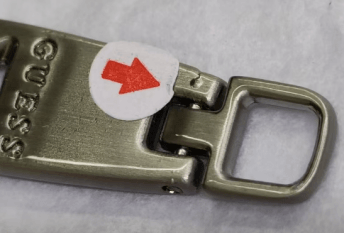
Bubbling is common in pull tabs made by metal die casting or plastic injection molding. It occurs when raw material moisture and air is unable to be fully discharged from high-temperature, high-pressure forming process, causing bubbles in the material or at a surface thereof. Results5266 Surface Bubbling The surface bubbling has the net effects of minimizing its visual appeal, and therefore making the product look cheap, but more importantly lossening its structural integrity. The bubble’s position is a stress concentrator. After multiple flex or pull cycles, the part cracks is then this becomes the mode of failure for the tab. Hence, regardless of size, it should be categorized as an unacceptable critical defect.
Scratches
Scratches are linear damage caused by friction or scraping between the surface of the strip and other hard objects during production, assembly, or transportation. Minor hairline scratches may be difficult to completely avoid upon close inspection under light, but any scratch deep enough to be distinctly felt with a fingernail indicates a crude surface treatment process. Scratches not only compromise the integrity of plating or coating layers, making them more susceptible to corrosion and rust starting at the damaged points, but also directly reflect an unclean production environment and carelessness in subsequent processing steps.
Sand Holes
Sand Holes are small, deep cavities produced by gas or vapor blowing off into the mold cavity and remaining filled. They are formed more gently than bubbles and could come from insufficient mold venting, raw material impurity, or wrong die-casting parameters. These compact grouped microscopically inscribed holes greatly multiply the surface area of the part, giving place and means to moisture, perspiration and corrosives in the atmosphere. For electroplated die-casting parts is the pin hole as a plating weak point. This is where the corrosion starts and spreads from, resulting in unsightly “rust spots.”
Pits
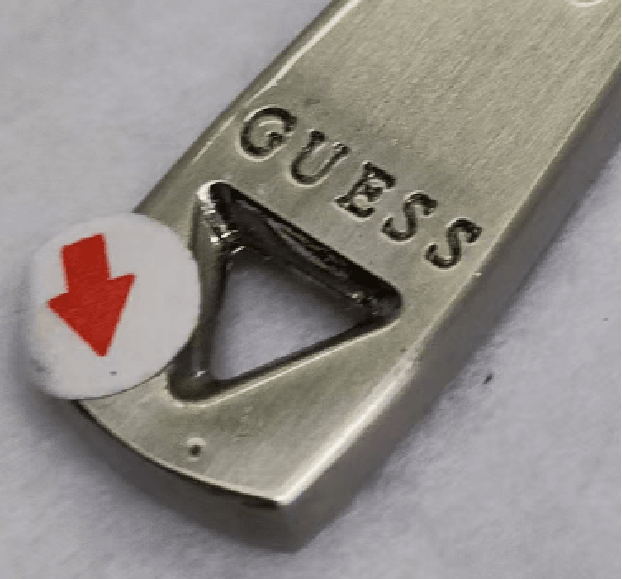
Unlike pinholes, pits are typically larger and more conspicuous. They may result from damage to the mold cavity itself or impurities introduced during molding, leaving permanent depressions after demolding. Pits similarly compromise surface flatness and coating uniformity, serving as clear evidence of inadequate quality control. A sheet that fails to achieve even the most basic surface flatness makes it difficult to have confidence in its internal material quality or long-term durability.
Selection Tips
When selecting a piece of luggage, take care to inspect every part of the zipper pull with your fingers and special attention should be paid to edges and corners. Then view the reflection of light from the zipper pull - above bright light. A well crafted zipper pull will maintain consistent reflection with no breaks or dents. Any sudden white spots, black spots or lines imply these aforementioned surface imperfections
The Second Test: Electroplating Process—The Technical Expertise Behind the Shiny Finish
Electroplating is a process that coats sheet metal substrates with a thin layer of metal film (such as chrome, nickel, antique bronze, black nickel, etc.). It not only provides a dazzling appearance but also effectively prevents corrosion of the base material. However, the electroplating process itself is extremely complex, and any error in any step can lead to “electroplating defects.”
Common Manifestations of Electroplating Defects
Plating Peeling/Flaking
It is one of the more serious plating defects. The primary cause is that of ineffective pretreatment, in which oil stain and oxides on the surface of the substrate are not completely cleared so that the plating film cannot fasten well with the substrate. The plating will eventually blister and “float” before the surface appears corroded, exposing the ugly, rest-prone substrate underneath.
Color unevenness/discoloration
It is desirable for a plating layer to have an even color and the pattern thereof to be continuous. The existence of uneven spots or lines mostly comes from the composition and evenness of plating solution, control of temperature as well as distribution of current density. The problem is even worse on antique finishes (i.e. gilded or bronze-patina etched), as the overhang creates an obviously inferior look..
Base Exposure
At the edges, corners, and other protruding areas of the plated part, if the base material’s color becomes visible, this is termed “base exposure.” This occurs because the current density at these sharp edges is excessively high, causing the plating layer to deposit too rapidly. However, due to their structural prominence, these areas wear away first during actual use, exposing the base material. This reveals an issue of insufficient plating layer thickness
The “orange peel” phenomenon and “uneven pitting”
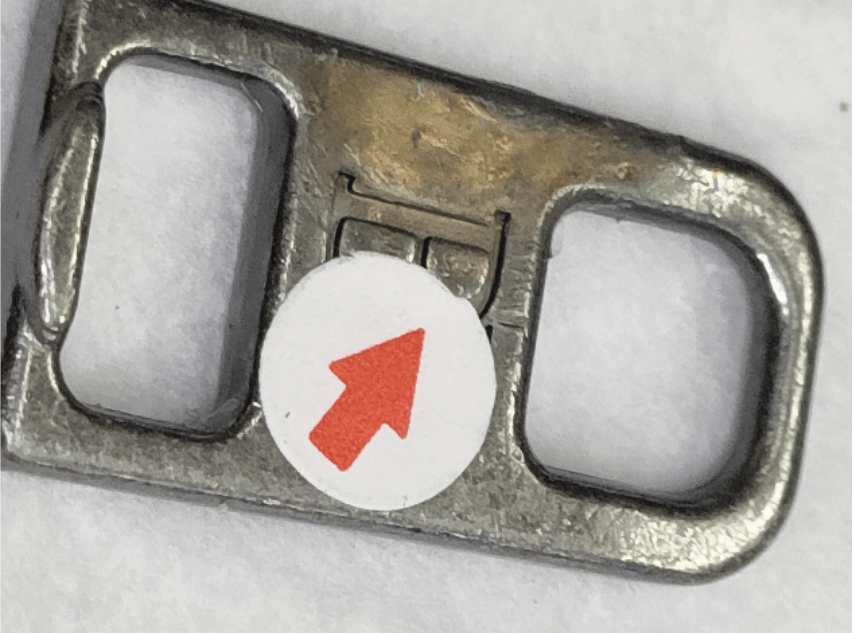
This is one that you’ve mentioned, and is a common problem with electroplating. The appearance of little wrinkles looking like orange peel covering the strip surface, or very small pits and elevations is mainly caused by:
- Irregular Surface of the Substrate: As discussed above, when the plating layer is formed in a case that any sand holes or shrinkage cavities occur in a metal substrate at die casting, these defects cannot be filled by the plating layer to enlarge them and cause an irregular surface.
- Pre-Treatment Corrosion: An over pre-treatment process such as acid pickling or activation etches the substrate surface producing micro-pits.
- Plating Solution Contamination: Solid impurity particles included in the plating solution are attached to the work surface thus providing an uneven coating.
- Inappropriate Current Values: When the current density is too high, it may result in a fast and irregular metal ion deposition so that the coated layer cannot be uniform and tight.
How to Assess Electroplating Quality
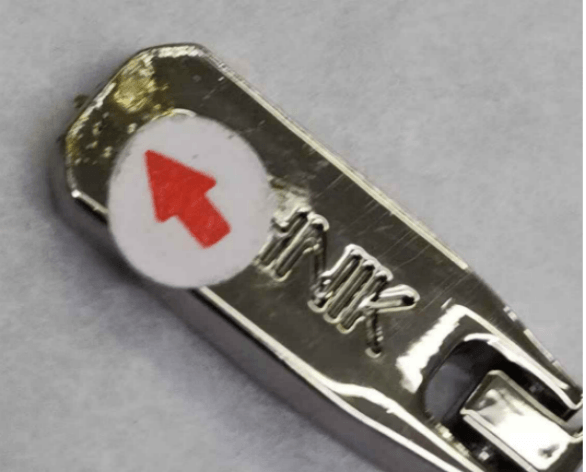
Beyond visual inspection, a simple test method is the light abrasion test. Scratch the non-primary display surface lightly with a fingernail using moderate pressure (or examine areas on samples that have been frequently touched during purchase). High-quality plating will leave only faint, easily removable marks—or none at all. Inferior plating may show noticeable scratches immediately, or even flake off. Additionally, premium plated pull tabs feel smooth and substantial in the hand, whereas low-quality ones feel flimsy and rigid.
The Third Trial: The Eternal Challenge of Gilded Gold—Corrosion Resistance and Black Spot Prevention
Bright luster gold (or known as imitation gold and antique bronze) have a classic, sophisticated look. Nevertheless, this colour is usually obtained by electro-plating with certain compositions of metals including copper, tin and zinc, both in combination with special passivating or oxidising or colouring treatment. Even in the process of electroplating, this stability becomes a problem.
Causes of Black Spots
The “black spots appearing after prolonged storage” you mentioned represent the most typical failure mode for gold-plated pull tabs. These black spots are essentially corrosion points, primarily caused by:
- Pore Corrosion: Although the plate-layer is dense, micro-size pores necessarily exists at micro level. When the tape is in an environment with moisture, oxygen and chlorides present (like sweat, seawater or industrial pollution) these pores create a little galvanic cell. The more electrochemically active base metal (usually copper or iron) becomes the anode, corroding faster to corrode away as it preferentially forms black copper(II)oxide (CuO) or garnet-red ferric oxide (Fe2O3). They travel along the pores to that surface, to generate “black spots.”
- Inadequate Post Processing: After plating the parts need to be properly cleans and passivation. It is passivation if the plated layer surface becomes an even thinner and denser oxide film. This was a long time the transitory corrosion barrier. Should the passivation treatment be insufficient, or there remain solution after clean, obviously the anti-corrosion performance of stretch-remark will significantly decrease
- Environmental conditions: The rate of this corrosion can also greatly speed up under extended storage in a cool and humid environment, with little to no ventilation.
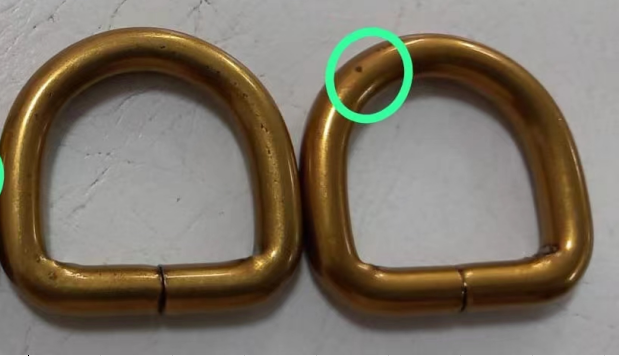
How to Avoid Black Spot Risks
- Opt for established brands: Bigger brands take care of the supply chain and production process to higher standards. They use thicker plating, which can achieve 500-1000 hours to salt spray test according to different request; They could do the plating thickness such as 20/25/30micron according to customers’requirement; Adopt advanced pulse electrolysis technology, the key equipment device which is independent researched and developed by our Ohmalloy material factory, reduces pore defects on the surface of platings and increases life time of products; Clad with high quality passivators.
- Check detail workmanship: Look into the hard-to-reach places — pull tab’s endless tail and the back inside. If the plating is still good and consistent in these areas, this shows the manufacturer’s attention to detail.
- Daily Maintenance: Our luggage is wear-resistant and scratch-resistant, but do not let the zipper pulls touch sweat, perfume and rainwater for a long time. Use the item on and wipe it down with a clean cloth, and then keep dry and it can last long.
Conclusion
Choosing quality suitcases pull tabs is an extensive process—from macro to micro; from short term to long term considerations. It requires us to:
- Using touch and sight as a “microscope,” examine its surface for flawless smoothness, eliminating bubbles, scratches, pinholes, and pits.
- Employing knowledge and experience as a “flaw detector,” scrutinize its plating layer for uniform density, vigilant against peeling, color variations, exposed base metal, and orange peel texture.
- Expect the “time effect” with a forward-thinking frame of mind, especially for special effects like gilded finishes. Know their material properties and foresee their corrosion behaviors during the long storage in order to avoid black spot..
An excellent zipper pull is the result of craft processing, quality value and material. It’s small but it sure says a lot — denouncing, without words, that a luggage brand knows what kind of quality and confidence its customers deserve. The next time you’re in the market for luggage, be sure not to overlook that little detail. It was the litmus test you held it up against to decide if the overall product was worth owning.

oyc
High Quality metal fitting, Dog Hook, Metal Ring,customer made Logo Plate